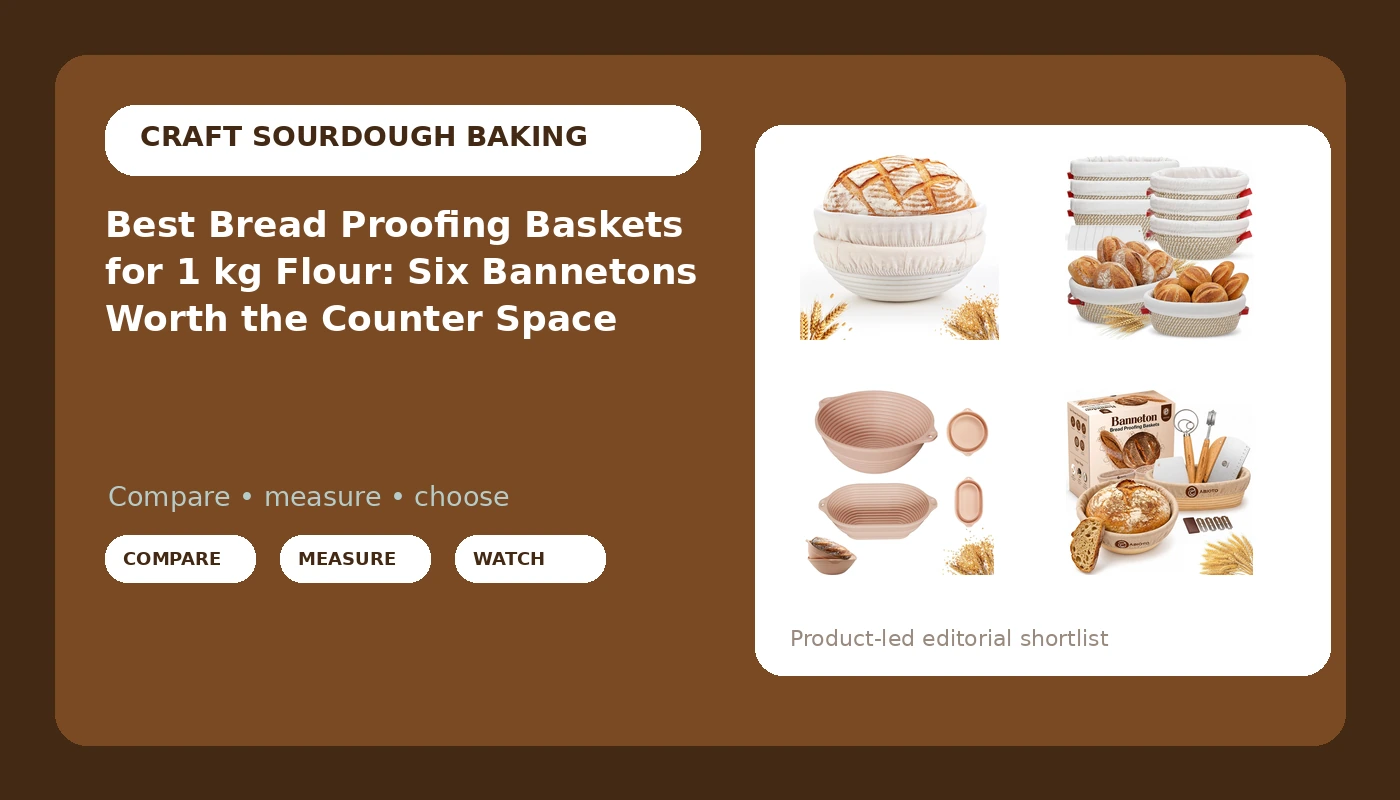
A 1 kg dough is the size most home sourdough settles on: one large boule, or two loaves if you split it. It is also the size that separates a basket that works from one that only looks right in a photo. The bread proofing baskets for 1 kg flour that earn permanent counter space share three things: a stated diameter of at least 9 inches, a liner in the box, and a material that does not grip a wet dough. Everything below is filtered on those points, using the product listings rather than a staged photograph.
Quick answer
The 9 Inch Banneton Bread Proofing Basket Set of 2, with Cloth Lining is the strongest fit for a 1 kg dough because both baskets are 9 inch rounds and the cloth linings come in the box, which is the pairing that lets a 1 kg boule go into an overnight cold retard without sticking at turn-out. Choose the Gejoy 6 Set Cotton Rope Banneton instead when you want round and oval shapes in one order and a scraper in the same box.
What is worth comparing in bread proofing baskets for 1 kg flour
Diameter comes first. A 1 kg dough at ordinary sourdough hydration fills a 9 inch round banneton; an 8 inch basket is really a 500 g basket wearing a bigger label, and an 11 inch one lets the same dough slump sideways instead of climbing. Ovals trade width for length, so a 10 inch oval suits the batard you shape from the same 1 kg of dough. When a listing does not state a diameter, that missing number is the reason to keep scrolling.
Material is the second filter. Woven cane and cotton rope pull surface moisture away from the dough, which is why they have stayed the default for so long, and the trade-off is that flour settles into the weave and the basket has to be kept dry. Rope baskets are generally softer against a heavily floured dough, but they can shed fibers if they are scrubbed rather than brushed. Silicone sits at the far end: nothing wicks, nothing sticks, and the basket folds flat, so it wins on cleaning and storage while giving up the slow drying that helps a wet dough hold its shape.
A liner changes the calculation. Cloth liners make a basket behave a little like a couche, and they are the difference between using a new basket on a 78 percent hydration dough in week one and flouring it in for a month. A basket advertised as non-stick with no liner is worth a raised eyebrow; a good share of the bread proofing baskets reviews out there are complaints about exactly that promise.
Piece count and storage come last but they decide how the tool lives in your kitchen. Two baskets cover most home bakers, since one can sit in the fridge on a cold retard while the other airs out. Six-piece sets look like value until you are hunting for somewhere to stack them.
Any bread proofing baskets buying guide is really a guide to your own dough: hydration, whether you retard overnight, and how much cupboard you can give up. The criteria that hold up are the boring ones. The top rated bread proofing baskets in this category almost always share a stated size, an included liner, and a material that can be brushed clean, and that is a low bar a surprising number of listings still miss.
How these products were compared
This guide to the best bread proofing baskets for 1 kg flour compares stated diameter and shape, material and how it behaves against a wet dough, whether a liner or scraper is included, how many baskets come in each set and how much space they take when empty, and the cleaning instructions the listing gives. Nothing here rests on a lab test, a panel, or a measured bake-off: the comparison works from the product listings, and where a listing leaves a detail out, this article says so instead of filling the gap. Product names, images, and retailer links are matched to the same verified product, so a card cannot point at a different basket from the one described.
That basis matters. A basket is a simple object, and most of what you need to know about it is on the label: size, material, and what else is in the box. The rest is technique, and no basket fixes technique.
Top pick
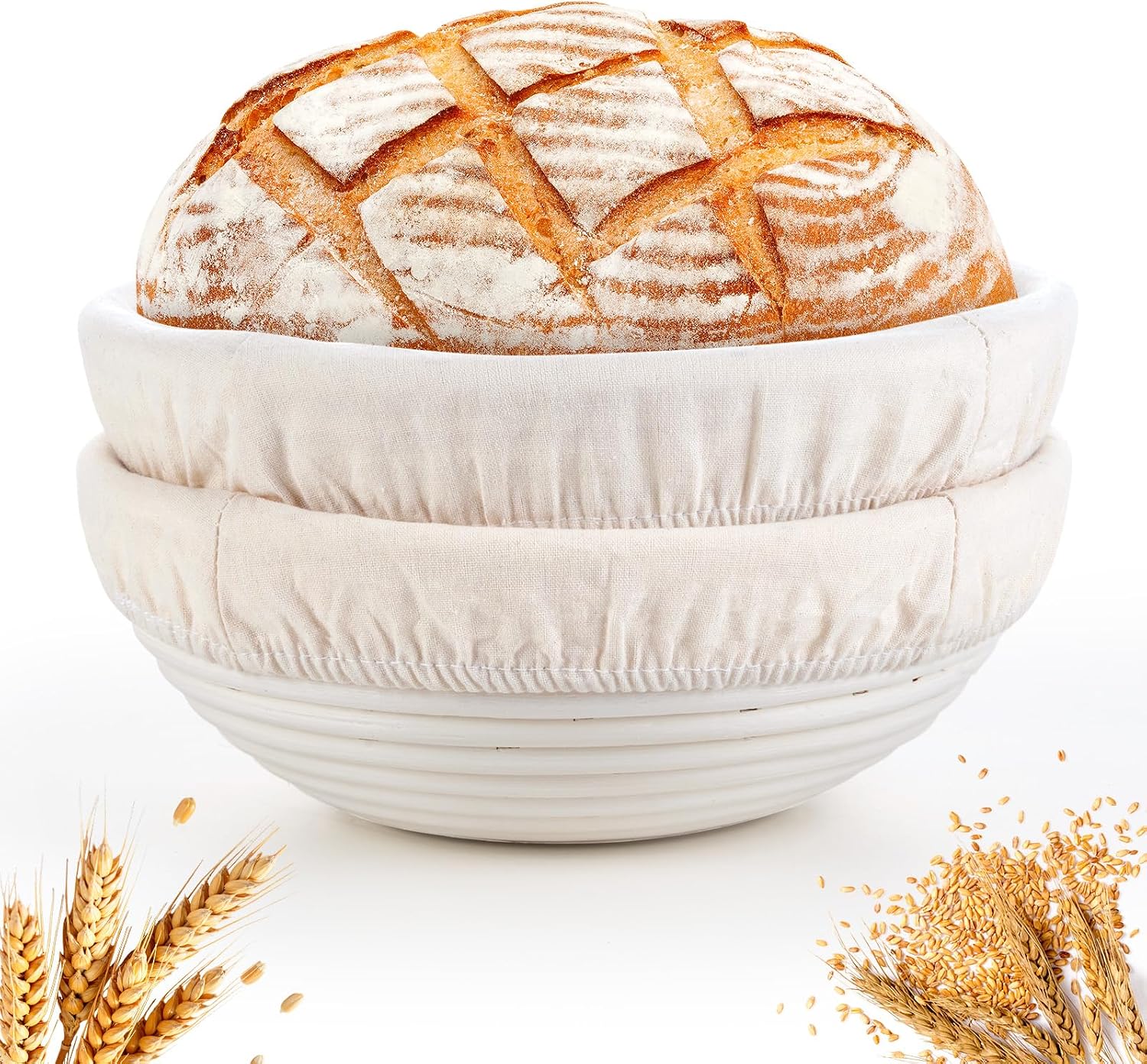
9 Inch Banneton Bread Proofing Basket Set of 2, with Cloth Lining
A set of two 9 inch bannetons with a cloth lining for each, sized for a whole 1 kg boule or for two 500 g loaves baked one at a time.
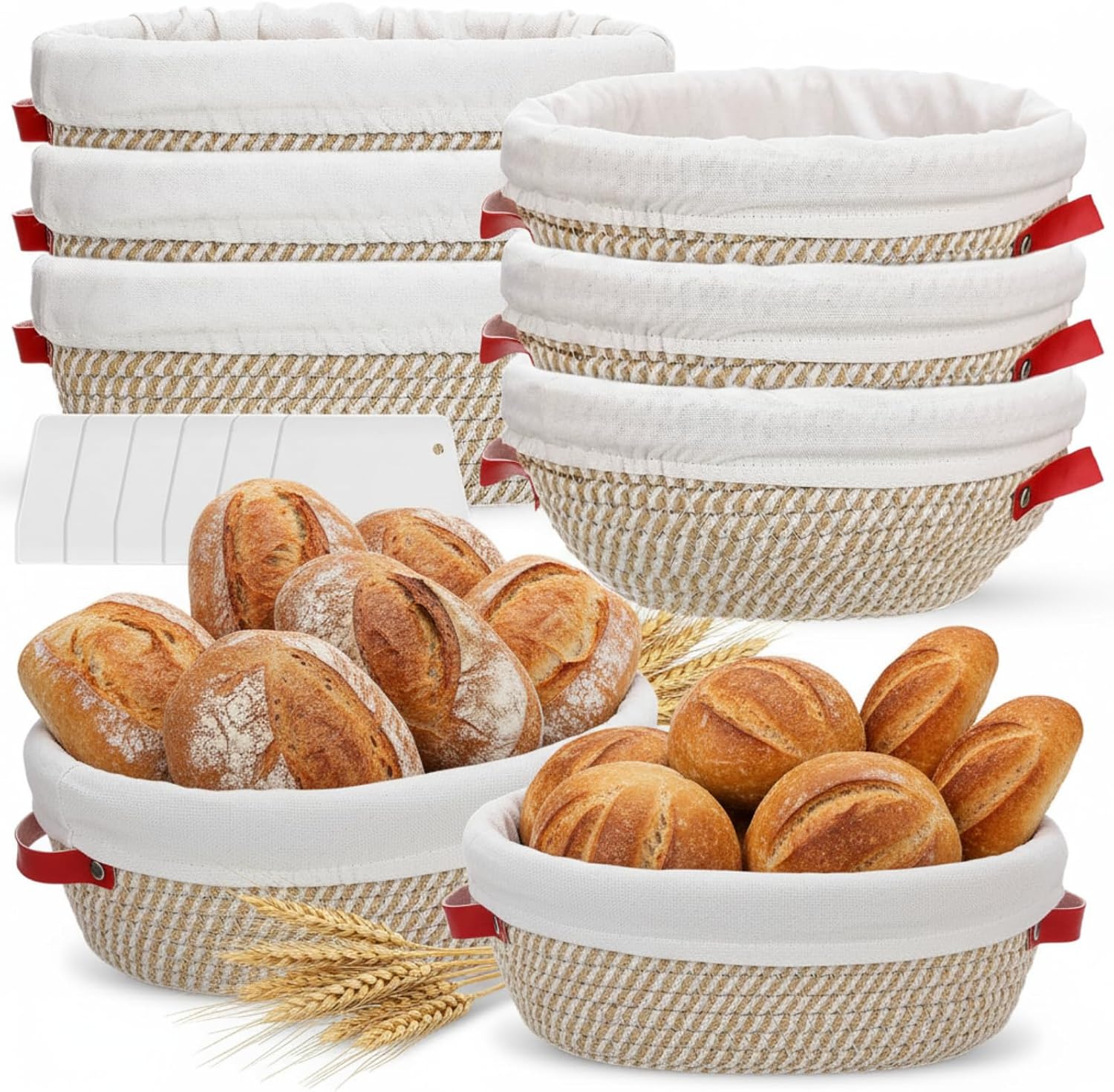
Gejoy 6 Set Cotton Rope Banneton Bread Proofing Basket with Cloth Liner and Plastic Scraper Banneton Dough Sourdough Proofing Bowls Kit for Home Sourdough Bakers (Round, Oval, 9'', 10'')
Cotton rope baskets across round and oval shapes in 9 inch and 10 inch sizes, with cloth liners and a plastic scraper included in the six-piece set.
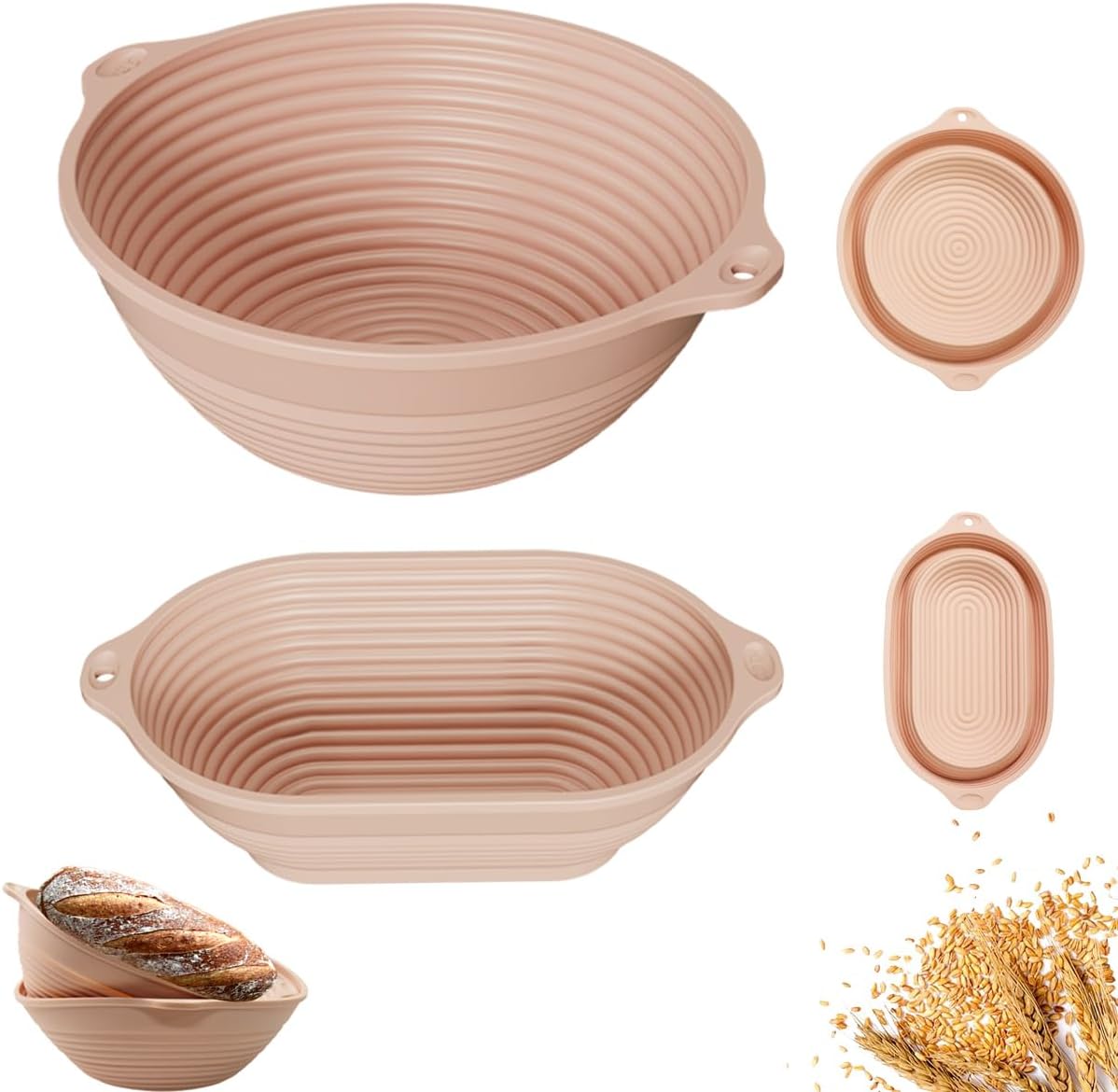
2-Pack Silicone Bread Proofing Basket,10" & 9" Collapsible Banneton for Sourdough, Non-Stick Dishwasher Safe Alternative to Rattan, Professional Baking Supplies(Round Pink+Oval Pink)
A collapsible two-pack in pink, one 9 inch round and one 10 inch oval, in silicone the listing describes as non-stick and dishwasher safe.
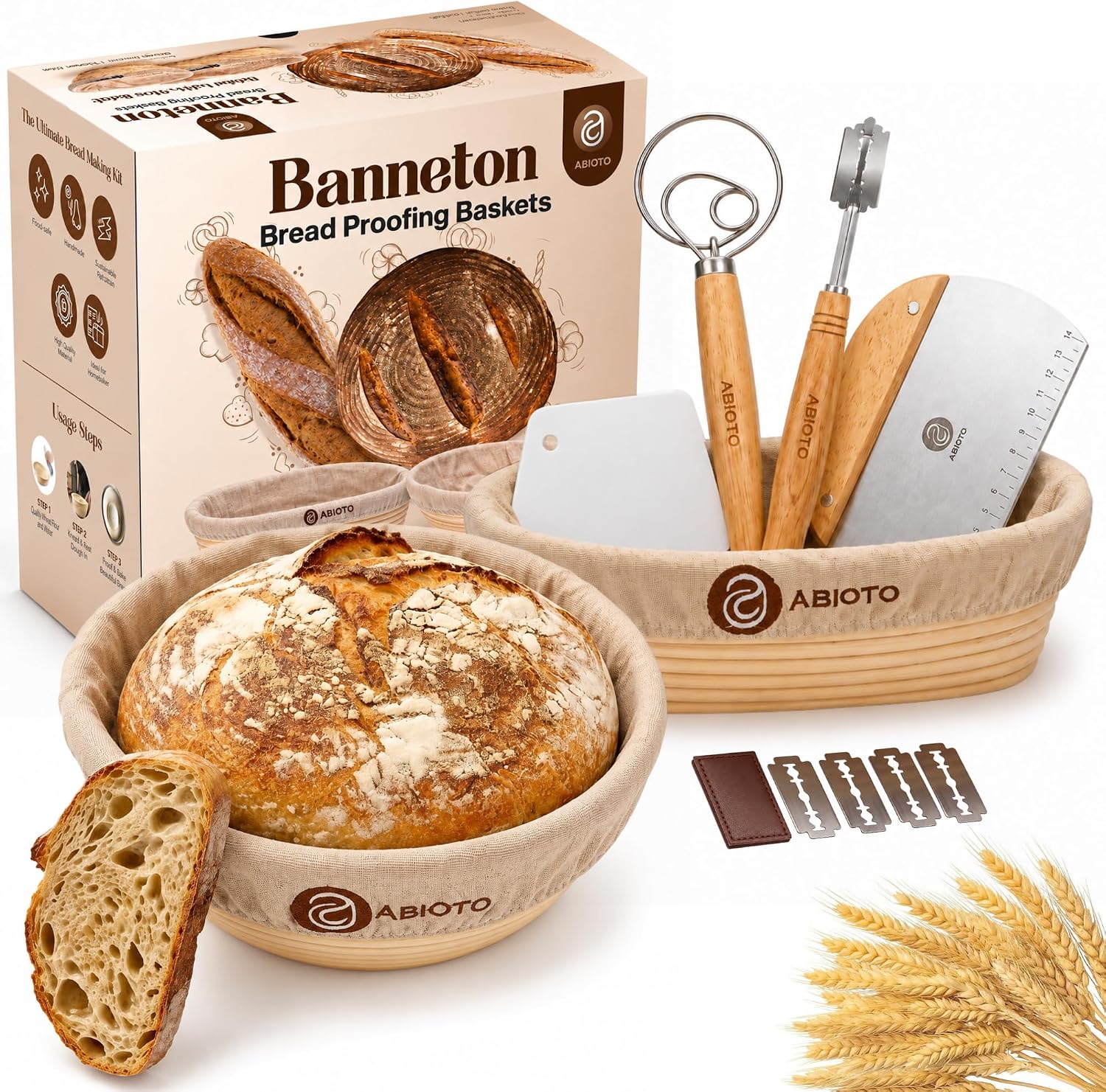
ABIOTO Sourdough Bread Proofing Baskets and Baking Supplies – 14-Piece Kit
A 14-piece sourdough kit that bundles proofing baskets with the baking supplies most people end up buying separately; the listing is the place to confirm which accessories are in the box.
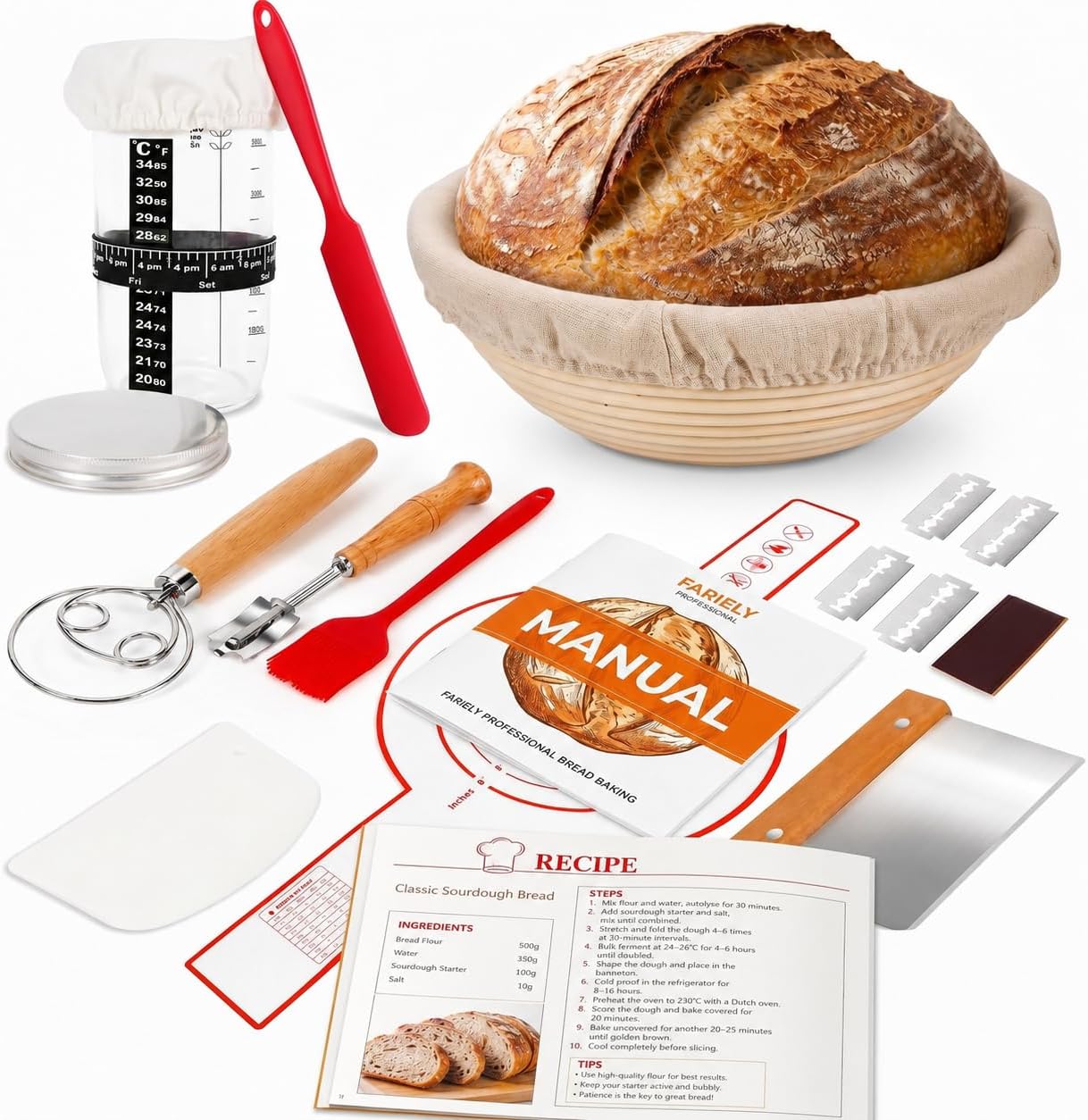
Complete Sourdough Starter Kit, Bread Baking Supplies, 9'' Round Banneton Bread Proofing Basket with Glass Sourdough Starter Jar & Tools, Bakery Accessories for Bread Making Baking Fermentation
A 9 inch round banneton bundled with a glass sourdough starter jar and tools, aimed at the baker who is starting from nothing rather than adding to a drawer of gear.
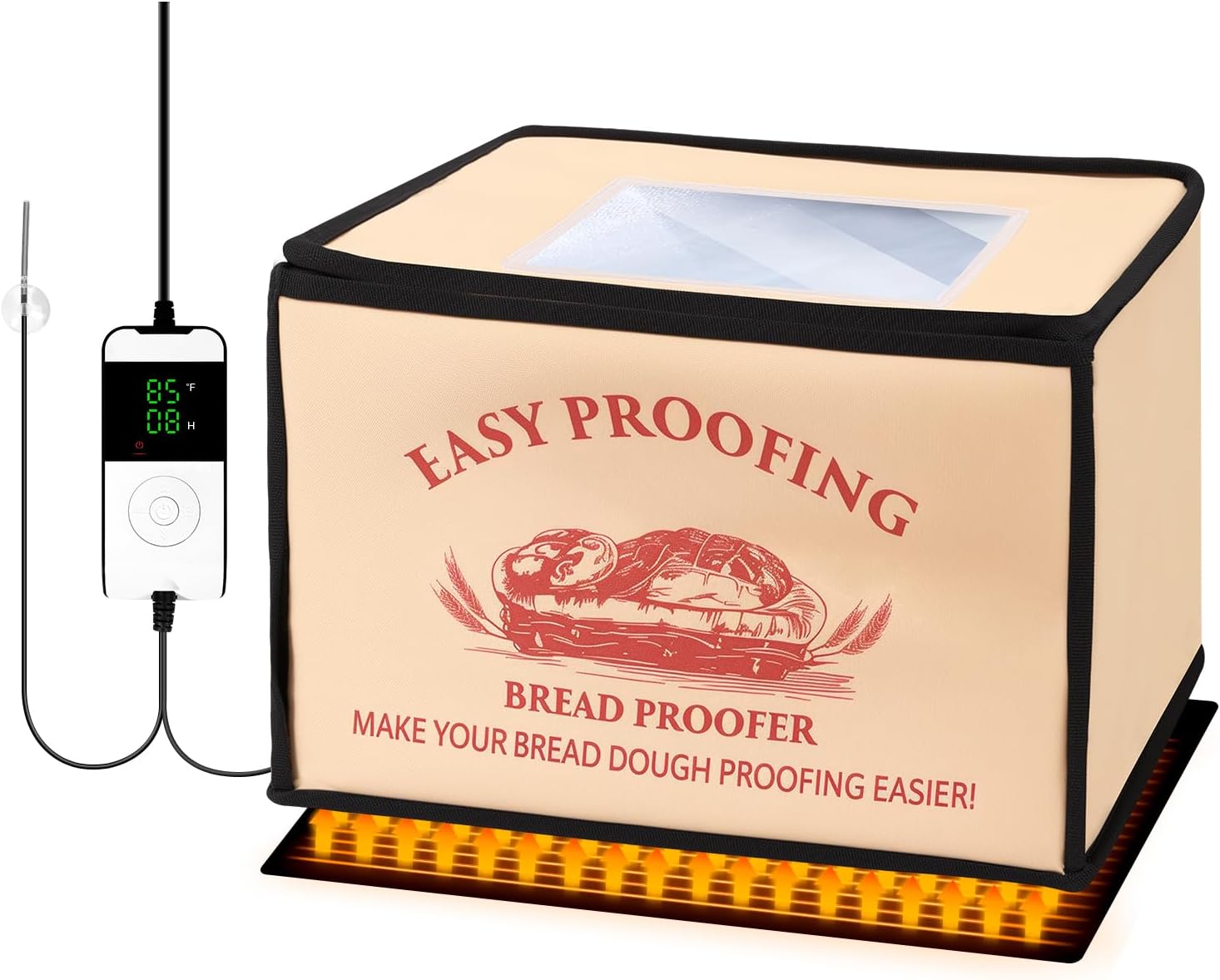
Folding Bread Proofing Warming Box with 50°F to 113°F Temp Control & 12H Timer, Dough Heater Warming Box – 16 x 12 x 10 IN Large Container Proving Drawer for Bread – sourdough Proofing Boxs Heated
A folding proofing container with a stated 50°F to 113°F temperature setting and a 12 hour timer, sized at 16 x 12 x 10 inches, for kitchens that run cold through bulk fermentation.
How to choose the right banneton
Start with the dough, not the basket. Weigh what you actually mix: a 1 kg total, left whole or split into two 500 g loaves, sets the minimum size. Whole, it needs a 9 inch round or a 10 inch oval. Split, a pair of 9 inch rounds is more useful, because both loaves then get the same geometry and rise at the same rate.
Then decide how wet you bake. Under about 70 percent hydration, a woven basket with a light dusting of rice flour is enough and the weave does its drying job. Above that, a liner stops being optional, and the first bakes are far calmer in a lined basket. If you retard overnight, the basket goes into the fridge cold and comes out cold, so a material that shrugs off the temperature swing has an advantage; an unlined basket that was barely floured will tell you about it at turn-out.
Storage is the quiet decider. Silicone folds flat and can stack in a drawer; six woven baskets cannot. If your counter is already crowded, a collapsible set earns its place even if it never develops the patina of a well-used cane basket.
If you are still working on shaping tension and the bench rest, spend the least you can on the basket and put the money into practice. A cheap lined basket with good dough handling beats an expensive one with slack shaping, and the bench rest is where most of that is decided.
For bread proofing baskets for beginners, the honest advice is one lined 9 inch round and nothing else until the loaves are consistent. Anyone shopping for the best budget bread proofing baskets should read the stated diameter twice and the marketing copy once.
9 Inch Banneton Bread Proofing Basket Set of 2, with Cloth Lining
This is two 9 inch round bannetons, each with a cloth lining, which is the size and the liner a 1 kg boule needs. The round shape suits a boule or a batard curled into a circle, and having two means one can be in the fridge on a cold retard while the other dries after washing.
The trade-off is in what the set leaves out. There is no scraper, no lame, and no oval, so a regular batard baker will eventually want a second shape, and the liners need washing and drying between bakes or they hold a sour smell. Bannetons of this type are usually woven, and woven baskets reward a dry brush rather than a soak, since soaking softens the rim over time. This is the pick for someone who already owns the bench knife and the dough tools and simply wants the basket sized correctly for a 1 kg dough.
Alternatives to consider
The Gejoy 6 Set Cotton Rope Banneton is better suited to a household baking more than two loaves a week, or to anyone who wants both shapes and a scraper in one order: the set spans round and oval across 9 inch and 10 inch sizes, so a 1 kg dough can go either way. The trade-off is storage and the rope itself, which is softer against the dough and holds flour deeper in its grooves than a smooth basket does.
The 2-Pack Silicone Bread Proofing Basket, 10" & 9" is a stronger fit when cleaning is the deciding factor. The listing describes it as non-stick, collapsible, and dishwasher safe, in one 9 inch round and one 10 inch oval, so it covers both shapes and folds flat between bakes. What it does not do is pull moisture off the surface of the dough the way a woven basket does.
The ABIOTO 14-Piece Kit, the Complete Sourdough Starter Kit, and the Folding Bread Proofing Warming Box cover the three cases where a basket alone is not the whole answer. The ABIOTO kit bundles proofing baskets with baking supplies for someone assembling a first setup, and its listing is where to confirm exactly which pieces are inside. The starter kit pairs a 9 inch round banneton with a glass starter jar and tools, which is the sensible order for a new baker: starter first, basket second. The warming box is for the cold kitchen, with a stated 50°F to 113°F range and a 12 hour timer in a 16 x 12 x 10 inch folding container. It is not a basket and does not replace one, but it solves a problem a better banneton cannot.
Day-to-day use and maintenance
Flour the basket, not the dough. A 50/50 mix of white rice flour and bread flour, dusted thin and brushed into the grooves, releases better than a heavy coat of wheat flour that turns pasty against a wet surface. Knock the excess out over the bin, not the sink, and let the basket air dry fully before it goes back on the shelf.
Woven and rope baskets should never be soaked. Brush them out dry, and if a dough has stuck, let the residue dry completely and then brush it away rather than washing it. Cloth liners are the opposite: they are meant to be washed, and they need to be bone dry before the next bake or they will stick worse than no liner at all. Silicone, per this listing, can go in the dishwasher, and it should be dried fully before folding, since a folded basket traps moisture in the crease.
The care caveat that matters most is heat. None of these baskets belongs in the oven, and only the silicone is described as dishwasher safe. A proofing box is for holding dough at a set temperature, not for baking, so the 50°F to 113°F range is a fermentation tool and not an oven setting.
Buying checklist
- Measure the dough you actually mix: a 1 kg total needs a 9 inch round or a 10 inch oval at minimum.
- Choose the material based on your usual hydration rather than one experimental bake.
- Confirm the exact set includes a cloth liner if the basket is woven or rope.
- Check how many baskets you get and where they will live when they are not in use.
- Read the cleaning instructions before the first bake, not after a dough sticks.
- Verify the current retailer price, availability, and return terms on the listing.
Final recommendation
Choose the 9 Inch Banneton Bread Proofing Basket Set of 2, with Cloth Lining when you bake a 1 kg dough into rounds and want the size and the liner sorted in one purchase. Choose the 2-Pack Silicone Bread Proofing Basket, 10" & 9" when cleaning and storage are what stands between you and a weekly bake, or the Gejoy 6 Set Cotton Rope Banneton when you need both shapes and more than two baskets. If your kitchen runs cold through bulk fermentation, add the warming box rather than buying a fourth basket.