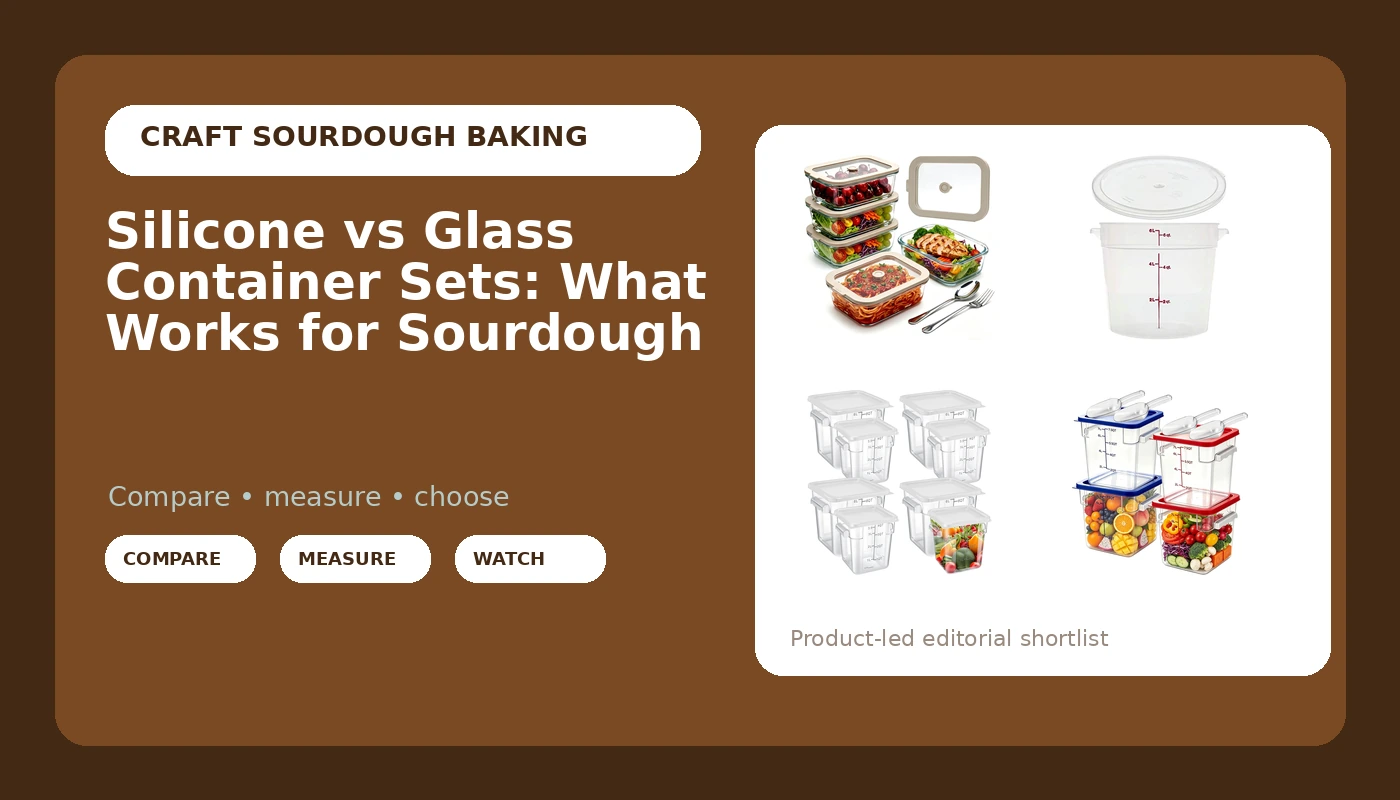
The silicone vs glass container sets question usually starts with a starter jar and ends with a fridge shelf full of dough. My first starter came in a mason jar with a rubber band around it, handed over by a neighbor in 2016. I have baked two loaves a week for most of the years since, sold 40 loaves a weekend from a shared kitchen from 2019 to 2021, and kept the same 50/50 bread-and-whole-wheat starter alive through two moves and one power outage. That history makes me biased in one direction: I want containers I can see through, scrub, and stack without playing Tetris. For most sourdough bakers, a glass container set with glass lids is the better first buy for starter and small doughs, and one large commercial plastic container is the better second buy for bulk fermentation.
The short answer is not glamorous. Glass wins on visibility and cleaning. Plastic wins on weight and volume. Silicone is the material I would use for a bowl scraper or a lid gasket, not for a starter jar I need to read at a glance. The table below is the short list I would actually compare, with the trade-off stated in plain terms.
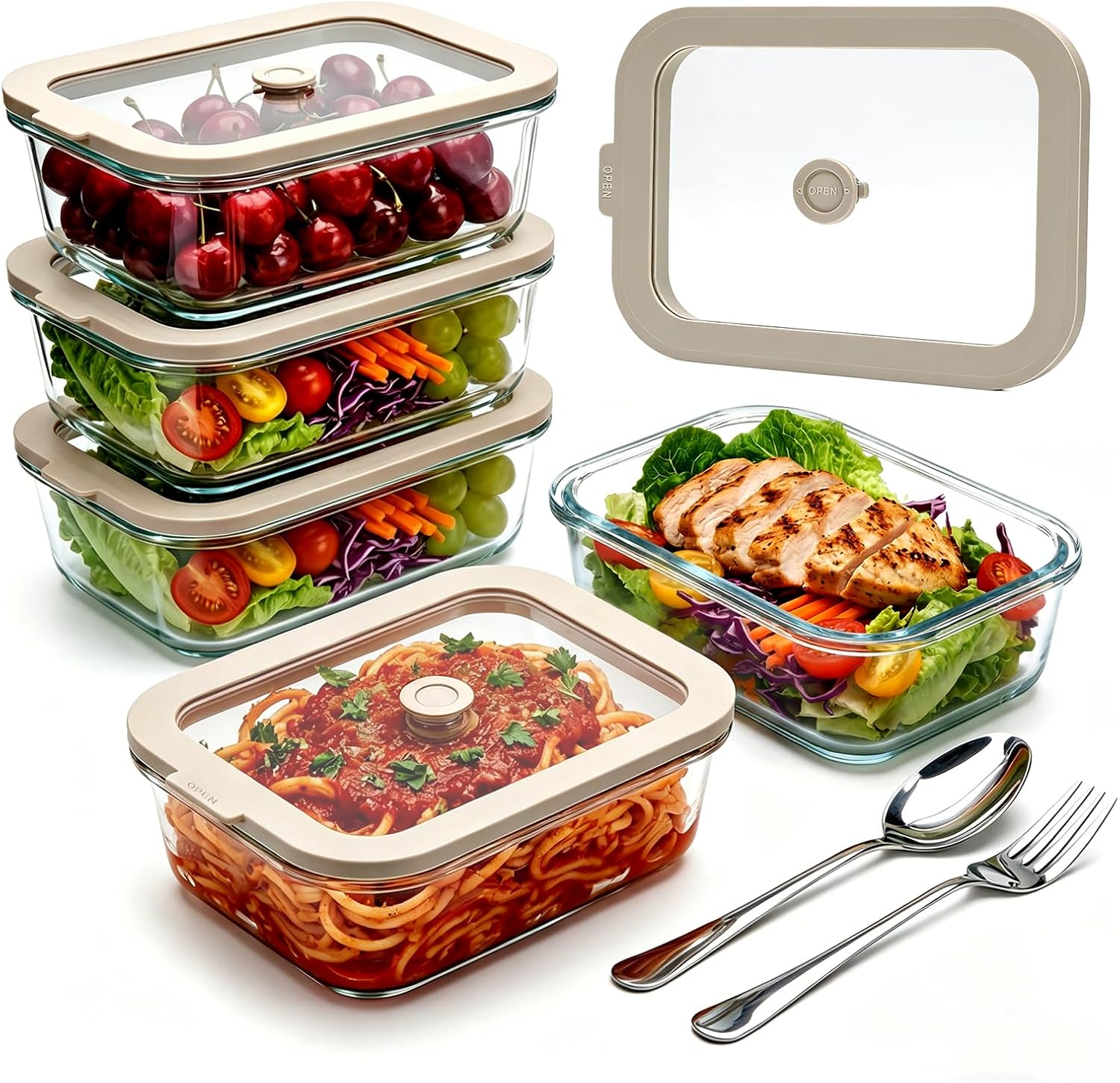
35 oz Glass Food Storage Containers with Glass Lids, 5 Pack, Airtight
Glass body and glass lid, 35 oz each, five jars; airtight seal; you can see rise and discard without opening
Five small jars mean more washing; glass is heavy and can chip at the rim if stacked wet
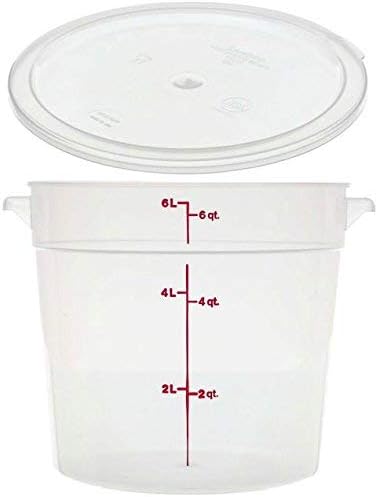
Cambro Camware Bundle 6 &12 Quart Translucent Round Food Storage Containers with Lids and Free Scraper
6 and 12 quart round containers with lids and a scraper; broad opening; translucent walls; a commercial workhorse for bulk
Round shape wastes fridge space; translucent plastic hides less than clear but more than glass; lids are the weak point if forced
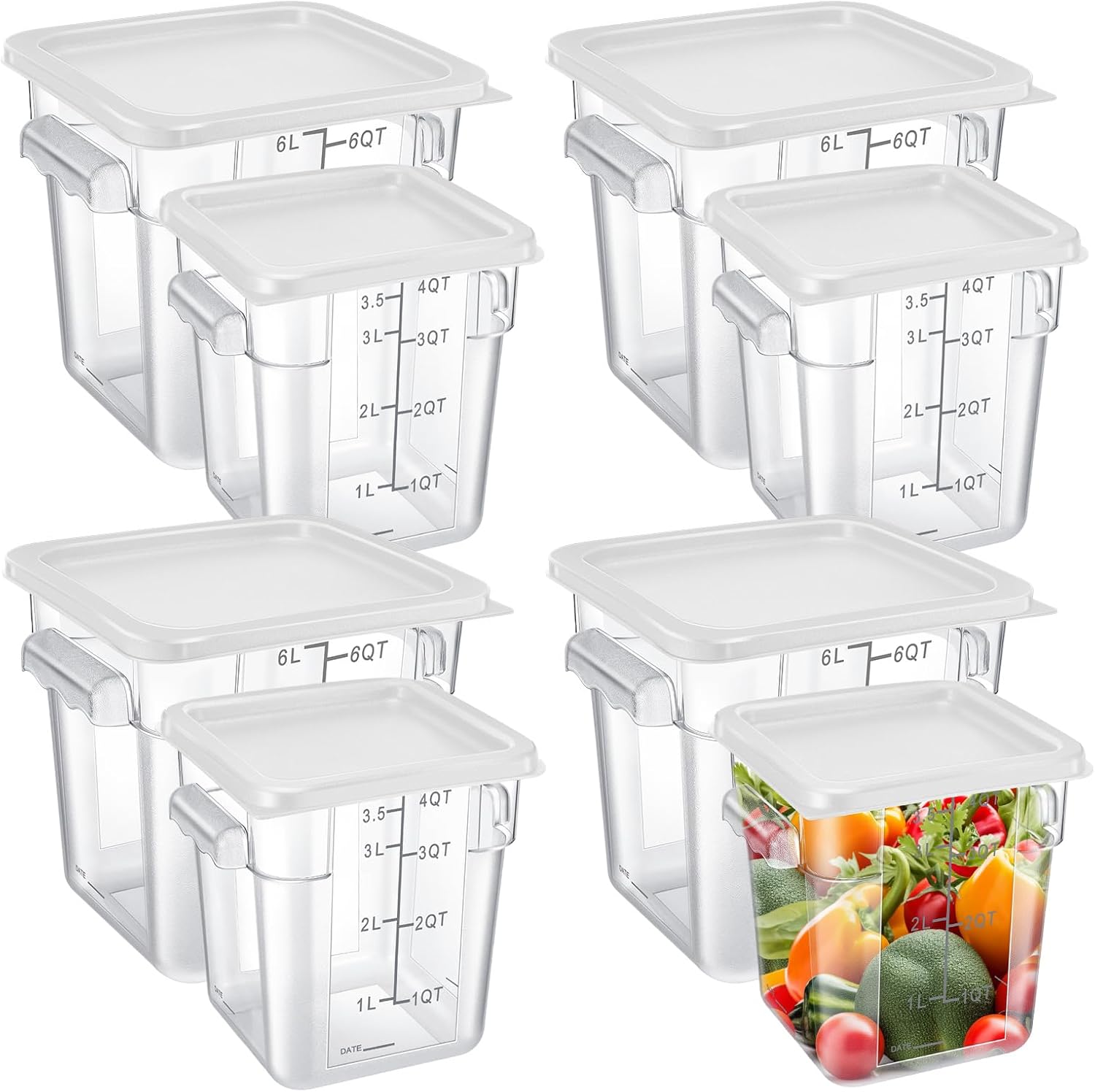
8 Pack 4 QT and 6 QT Food Storage Containers with Lids Scales Handles Square Clear Restaurant Food Storage Containers Polycarbonate Commercial Grade for Kitchen Marinating Meat Dough(White)
Eight square containers in 4 and 6 quart sizes; scale markings, handles, stackable; clear enough to check dough
Polycarbonate scratches and can stain; eight lids is a lot of cleaning; light weight can feel flimsy when full
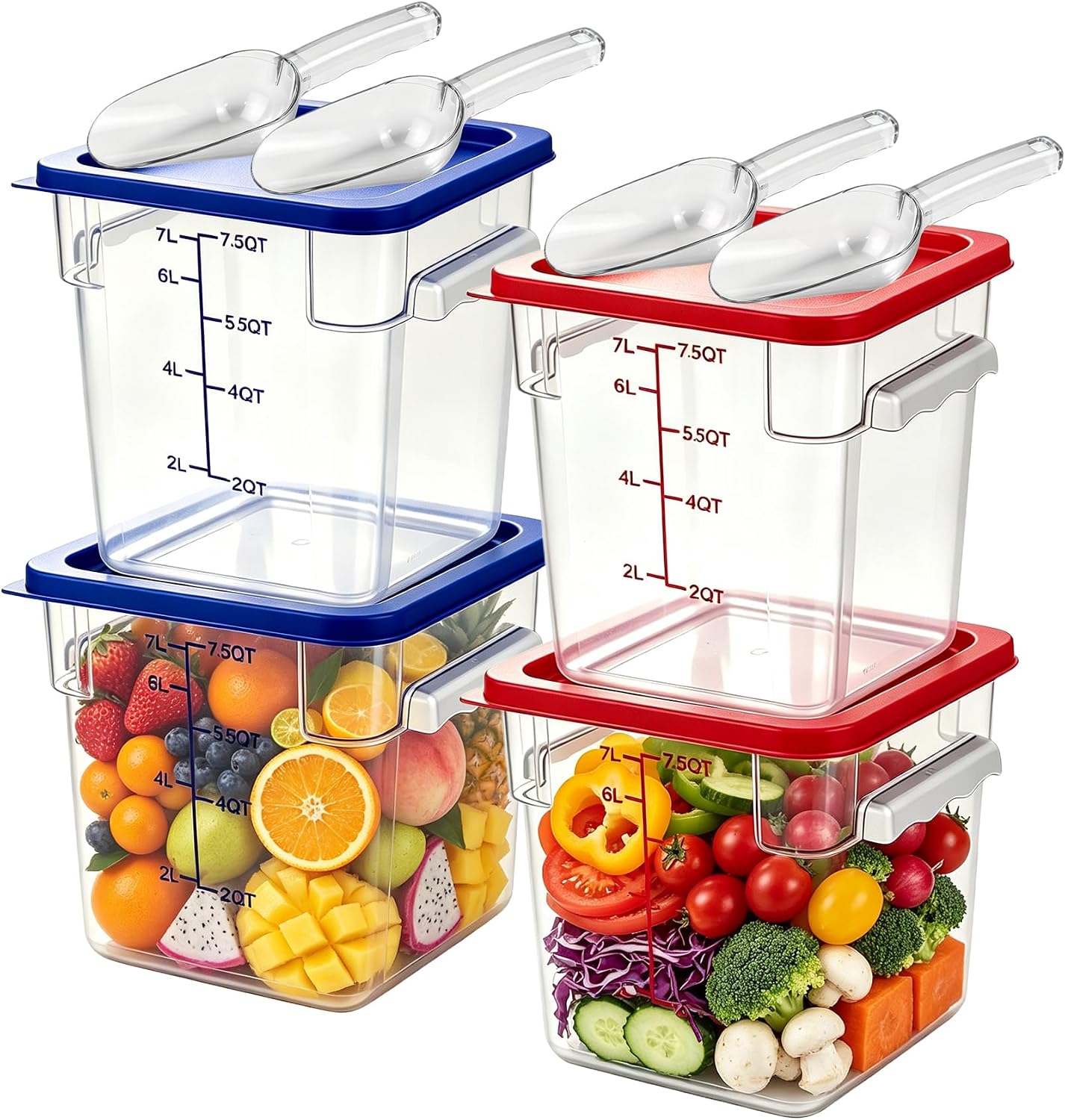
4 Pack 8 Qt Square Food Storage Containers with Lids, Commercial Food Storage Containers with Scale Markings and Handles, Stackable for Brining, Freezer, Fermentation, Storage(Red, Blue)
Four large 8 quart squares; scale markings, handles, stackable; good for big batches, brining, and freezer blocks
Huge footprint; overkill for a single loaf; colored lids add matching hassle
Prices and availability may change.
The silicone vs glass container sets trade-off
The silicone vs glass container sets decision is not a fair fight if you judge by feel alone. Silicone is flexible, light, and will not shatter when it hits a tile floor. That matters in a kitchen with a dish rack near the edge. But a starter jar has a different job than a freezer bag. You need to see the rise line, smell the ferment, and scrub off dried flour without the walls absorbing anything. Silicone is good at sealing and bad at showing you what is happening. It also tends to hold odors and stains over time, especially with whole-grain flour and a long ferment. I would use silicone for a dough mat, a bowl cover, or a spatula. I would not use it as my primary starter vessel.
Glass is heavier and breakable. A glass container that gets knocked off a shelf can end a bake day. But glass gives you a clean read on the dough, does not take on smells, and comes clean with hot water and a brush. When I weigh container sets material durability, I am not just asking which one survives a drop. I am asking which one survives nine years of weekly washing, scraping, and stacking. Glass chips at the rim. Plastic scratches. Silicone stains. Every material loses somewhere.
The practical answer is to stop looking for one material that wins everywhere. Use glass where you need to see and clean. Use plastic where you need volume and light weight. That is the whole silicone vs glass container sets argument in one sentence, and it is why the table above has both.
How I judge container sets
I have not run a lab test on these containers. My basis is nine years of home baking, two years of selling loaves, a spiral notebook of bake logs, and the failure modes that show up again and again in container sets reviews. I read reviews the way I read a dough formula: for the repeated complaint, not the first happy paragraph. A lid that cracks at the corner, a measurement that rubs off, a square container that does not fit the fridge door, those are the details that decide whether a set earns its shelf space.
Here is how to choose container sets for a sourdough kitchen. First, match the container to the job. A starter jar needs a wide mouth and a clear wall. A bulk fermentation tub needs volume, a flat bottom, and a lid that seals well enough to keep a skin from forming. A cold retard container needs to fit the fridge without blocking the milk. A freezer container needs a straight wall so a block of dough or stock releases. Second, check the lid. Third, check the markings. Painted markings wash off. Molded markings last. Fourth, check the footprint. A round 12 quart tub holds a lot, but it wastes corner space. A square 8 quart tub uses the shelf better.
For container sets for beginners, I would not start with an eight-piece set. Start with one glass jar for starter and one 4 to 6 quart clear container for bulk. Add the big tub when you start making two loaves at once. That is a less expensive path and it teaches you what size you actually reach for.
Glass container sets: the starter and small dough default
The glass set in the table is a 5 pack of 35 oz containers with glass lids and an airtight seal. That size is right for splitting a starter, holding discard, or proofing a small dough in the fridge. The glass lid is the detail I care about. A plastic lid on a glass jar is fine until the seal gets loose or the lid picks up a smell. A glass lid does not hold odors, and you can see through it without lifting the lid. For a starter, that is the difference between a quick glance and a full inspection.
The trade-off is weight and washing. Five 35 oz glass containers are heavy when you carry them to the sink, and five lids mean five rims to scrub. If you keep a starter in one jar and only use the others for storage, the set is more than you need. If you bake two loaves a week and keep a backup starter, the five-pack makes sense because you can rotate jars without washing the active one every day.
Glass is also the material that tells you the truth. You can see a false rise, a layer of hooch, or a dry patch at the shoulder. You cannot see any of that through opaque plastic or silicone. That is why I would spend glass money on the starter vessel and save the commercial plastic for the bulk tub. The glass set is not the biggest container in the kitchen, but it is the one I would use every week.
Commercial plastic sets: volume without the weight
The Cambro bundle is the classic restaurant supply answer: a 6 quart and a 12 quart translucent round container, lids, and a scraper. The round shape is easy to stir and easy to clean because there is no corner for flour to pack into. The 12 quart size is enough for a large batch of dough or a long brine. The 6 quart is the size I would use for a double batch of bread dough or a big feed of starter before a bake. The scraper is a small thing, but it is the right small thing.
The 8 pack of 4 and 6 quart square containers is the other end of the commercial spectrum. You get more containers, scale markings, handles, and a square footprint that stacks better in a fridge. The clear walls let you check dough development without opening the lid. The trade-off is that polycarbonate is light and can scratch. Once a container is scratched, it holds onto flour and stains. Eight lids also mean eight pieces to wash and store. If you are organized, that is a good deal. If you are not, you will be hunting for lids.
The 4 pack of 8 quart squares is for big work: large batches, brining, freezer blocks, and dough for a bake sale. The handles matter when the container is full. The scale markings matter when you are mixing by weight and do not want another bowl. The footprint is the cost. Four 8 quart squares take up a lot of shelf or fridge space. For a home baker making one or two loaves a week, that is more container than you need. For a baker making four loaves or a weekly pizza dough batch, it is the right size.
The top rated container sets in restaurant supply are built for volume, not for a home fridge. That is the gap to watch. A 12 quart round tub that is perfect on a commercial prep table can be awkward on a home shelf. Measure your fridge before you buy the big set. The container sets storage footprint is as important as the capacity printed on the side.
The lid is the hinge
A container set is only as good as its lid. Glass lids with a silicone gasket seal well, but the gasket can trap flour and needs to be cleaned properly. Plastic lids are lighter and less likely to shatter, but they can warp or crack if they go through a hot dishwasher cycle. The Cambro lids are the kind that press on and stay on, which is what you want for a bulk ferment. The square polycarbonate lids are fine until someone forces a lid onto the wrong size container. Then the corner cracks.
The container sets price band is wide, but the price is not the best predictor of a good lid. A cheap set with a well-molded lid can outlast an expensive set with a thin gasket. When you get a new set, fill it with water and turn it upside down over the sink. That tells you more about the seal than any product photo. Do that before the return window closes. If the lid leaks, the set is a storage container, not a fermentation vessel.
Cleaning effort and storage footprint
container sets cleaning effort is where glass and plastic split most clearly. Glass does not stain, but it is heavy and can chip. Plastic is light, but it scratches and can hold onto tomato sauce, turmeric, or dark flour. Polycarbonate is tougher than a thin deli container, but it is not scratch-proof. Use a soft brush, not a steel scrubber. Skip the dishwasher for any lid with a gasket if you want the seal to last. That is not a brand rule. It is a lid rule.
Storage footprint is the other quiet cost. Round containers are easier to stir and clean, but they waste shelf space. Square containers stack better and use the corners. If your fridge is small, a square 4 or 6 quart set will do more for you than a 12 quart round tub. If you have a deep shelf and make big batches, the round tub is easier to work with. Measure the shelf, then measure the container. Do not buy the set first and rearrange the kitchen after.
The container sets material durability question also depends on how you stack. Glass on glass can chip. Plastic on plastic can scratch. A folded towel between stacked glass containers is cheap insurance. So is not stacking a full 8 quart container on a lid that was not designed for that load.
How to choose container sets for sourdough
Here is how to choose container sets for sourdough without buying three sets you do not need. Start with the starter. One clear glass jar with a wide mouth and a lid you can vent is enough. If you keep a backup starter or split feeds, a five-pack of glass containers is a sensible upgrade. Next, add a bulk fermentation container. A 4 to 6 quart clear square container is the sweet spot for a 1 kg boule because it gives the dough room to rise and still fits on a fridge shelf. If you bake two or more loaves at once, go to an 8 quart or a 12 quart round tub.
Then add a cold retard container only if your bulk container does not fit the fridge. Many bakers use the same container for bulk and cold retard, which saves space and washing. If you do that, make sure the lid seals well enough that the dough does not dry out. A shower cap or a reusable cover is a cheap backup.
The best budget container sets are not the biggest sets. They are the ones with molded markings, a lid that seals, and a size that fits your shelf. A set of five small glass containers can be a budget win if you use them daily. A set of eight commercial containers can be a waste if half of them sit in a cupboard. Buy for the job you have now, not the bakery you might open later.
What I would skip
This is a container sets buying guide, so I should say what I would skip. I would skip any starter jar with painted measurements that are already fading in the product photo. I would skip a set with lids that have no replacement path, because lids fail first. I would skip a giant set for a beginner. I would also skip the idea that one material wins every job. A single large stainless proofing box is a good tool for one big dough, but it is not a container set, and it does not solve the starter jar problem. That is why it is not in the table.
I would not skip glass because it is heavy. I would not skip plastic because it scratches. I would buy the smallest set that covers the jobs you actually do, then add one large container when your batch size grows. That is a less exciting answer than a matching stack of containers, but it is the one that keeps the counter clear.
The verdict
For most home bakers, the glass set is the first buy. It gives you a clear view of the starter, it does not hold odors, and the glass lids make a tight seal easier to trust. The 35 oz size is small enough to handle and large enough for a split feed or a small dough. If you bake two loaves a week and keep a backup starter, the five-pack earns its space.
The second buy is a commercial plastic container for bulk. The Cambro bundle is the simple choice if you want a round tub and a scraper. The 8 pack of square containers is the better choice if you want scale markings, handles, and a fridge-friendly footprint. The 4 pack of 8 quart squares is for big batches and freezer work. None of these is a status object. They are tools that should survive a scrub, a stack, and a cold night in the fridge.
If you are still deciding between silicone vs glass container sets, ask one question: do you need to see the dough? If yes, glass. If you need a flexible cover or a mat, silicone. If you need volume, plastic. That is the whole decision, and it is a better one than buying a matching set that looks good on a shelf and fails at the lid.