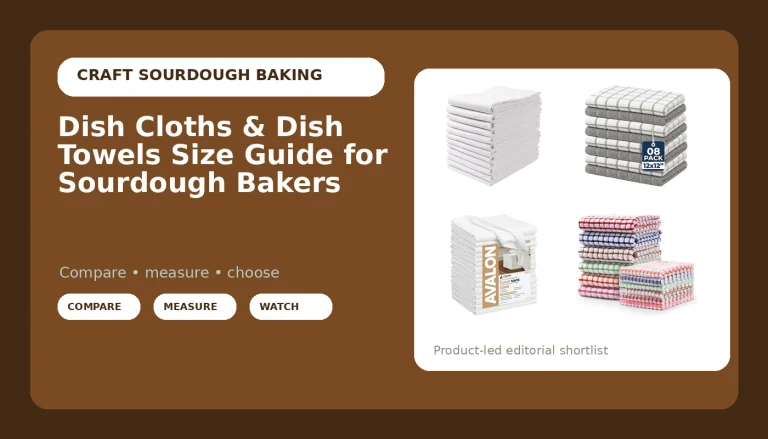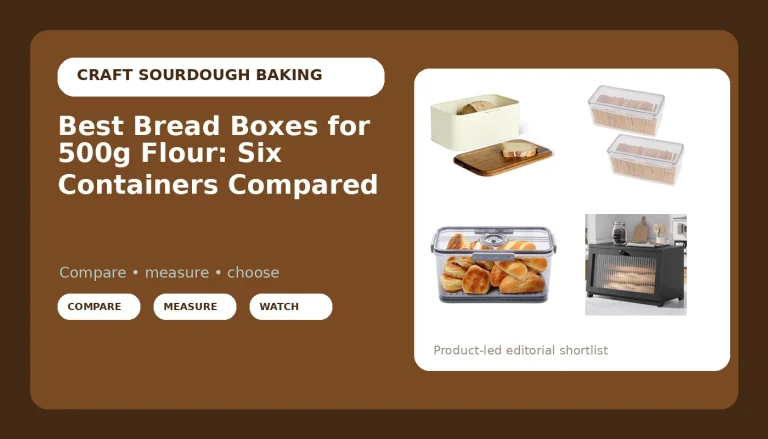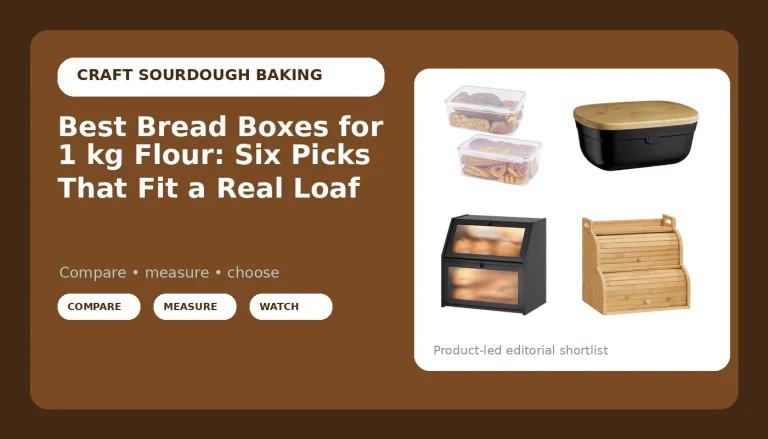
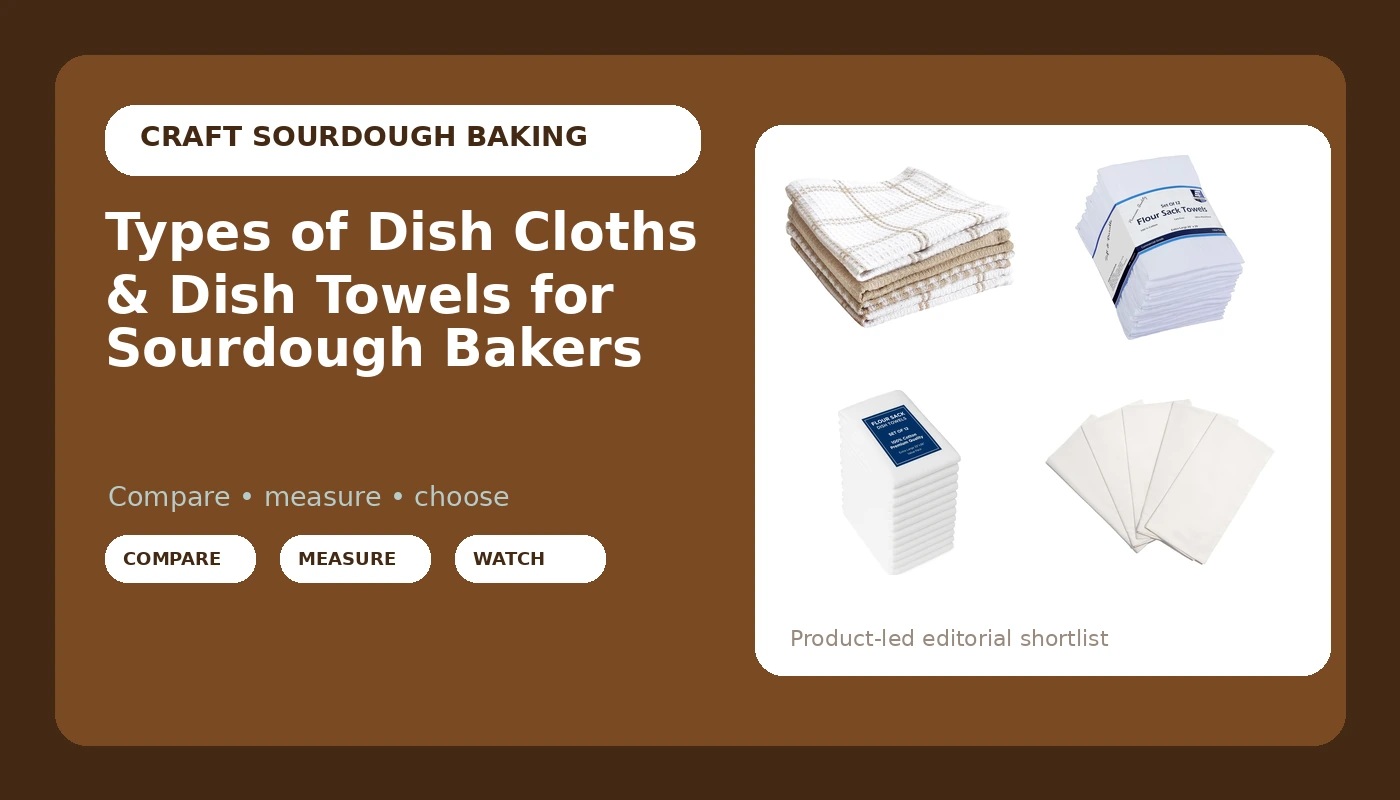
Most sourdough instructions mention linen once and move on. That leaves a new baker standing at a drawer wondering why a 12 inch waffle square, a 28 inch flour sack, and a cloth sold specifically for covering rising dough are all called towels. The types of dish cloths & dish towels you keep on the bench are not interchangeable, because each one is built for a different kind of mess: wet hands, a floured counter, a basket of dough going into the fridge, or a jar rim that needs a wipe before the band goes back on. This is a breakdown of what each style is for, what the listed dimensions imply once a 1 kg boule is sitting under the cloth, and where each one stops being useful.
Quick answer
Keep three cloth types rather than one: a small waffle-weave cloth for hands and counters, a large flat flour sack towel for covering baskets and straining, and a dedicated unbleached cloth that is allowed to touch dough. Buy undyed or white cotton so stains show and bleach works, and read the listed size before anything else, since a 12 by 13 inch cloth and a 33 by 38 inch cloth solve different problems. The five options below cover those jobs, followed by how weave and dimensions change what a cloth can actually do.
Five useful options
| Model | Best fit | What stands out |
|---|---|---|
| T-Fal Signature Cotton Waffle Dish Cloths, Sand, 12×13 in, 4pc | Bench wipes and wet hands | Waffle weave in a 12 by 13 inch square, four per pack |
| Flour Sack Kitchen Towels (White,12 Pack) 100% Cotton, 28×28 Inch | Everyday all-purpose towel | 28 by 28 inch cotton, 12 per pack |
| ROYALE LINENS Flour Sack Towels, 12 Pack, 33×38 Inch | Covering large baskets, straining | 33 by 38 inch, the largest cloth here, 12 per pack |
| Bread Towels for Proofing Cover, Organic Cotton, 27×27, 5 Pack | Dough contact during proofing | Organic cotton, unbleached, five per pack |
| WHITEWRAP Flour Sack Towels 18×28, 3 Pack | Small batches, crafts, embroidery | 18 by 28 inch, three per pack |
Bench cloth: T-Fal Signature Cotton Waffle Dish Cloths, Sand, 12×13 in, 4pc
This one earns its place at the sink and the counter, not on the dough. A 12 by 13 inch waffle cloth is the right size to keep folded by the board while you shape, wipe the bench between bulk and divide, and dry your hands so you do not paste flour onto a loaf. What it is not: a proofing cover. The same open weave that makes it dry fast also lets air reach exposed dough, and a small square will not drape a 9 inch banneton without gaps. The sand color hides flour better than white and shows oil sooner. Check the size before buying, because waffle cloths of this style are also sold considerably larger.
Everyday workhorse: Flour Sack Kitchen Towels (White,12 Pack) 100% Cotton, 28×28 Inch
This is the towel that does the boring work: wiping the rim of the starter jar, covering a bowl during bulk, drying the bench scraper, mopping the water that collects under a proofing basket. Twenty-eight inches is the useful middle size, big enough to cover a bowl and small enough to fold into a drawer. Twelve to a pack means a clean one stays on the bench and a dirty one goes in the wash without running short mid-bake. The trade-off is that plain white cotton stains, and it stains permanently. That is not a flaw if you treat dough towels and floor towels as two separate piles. The listing calls them extremely absorbent and sturdy; those are the seller's words, and the honest test is whether a cloth keeps absorbing after ten washes.
Large format: ROYALE LINENS Flour Sack Towels, 12 Pack, 33×38 Inch
Size is the whole argument here. A 33 by 38 inch cloth drapes a round banneton with enough overhang to tuck, and it covers a large mixing bowl during bulk without sliding off when the dough starts to push up. The same cloth works as a straining square for yogurt or cheese, because you can gather the corners without the fabric pulling tight across the middle. What it is not: a bench wipe. A cloth this size gets in the way at the shaping bench, and pulling a 38 inch towel through a jar rim is clumsy. The trade-off against the smaller flour sack option is straightforward: more coverage, more fabric to wash and dry, and more cloth to cut down if you want a small square for a specific job.
Proofing cover: Bread Towels for Proofing Cover, Organic Cotton, 27×27, 5 Pack
The case for a separate proofing cloth is contamination, not romance. The towel that wiped the counter, the jar rim, and your hands should not go back over a rising loaf, and a dedicated cloth solves that with a rule instead of willpower. Twenty-seven inches covers a medium banneton or a bowl, and unbleached cotton means the cloth touching dough is the cloth with the least added to it. The trade-off is specialization: five cloths that only cover dough are five cloths not wiping the bench, so you still need a general towel beside them. Buy this if you want the rule built into the drawer. Skip it if you already keep dough cloths strictly separate.
Small pack: WHITEWRAP Flour Sack Towels 18×28, 3 Pack
An 18 by 28 inch cloth is a half-size towel. It covers a small bowl, wipes a bench, dries a proofing basket after rinsing, and fits in a drawer without a fight. Three to a pack makes it a low-commitment way to learn whether you like a smaller cloth at the bench before you buy twelve of something. It is also the format that drifts into non-baking work: embroidery, covering a bowl in the fridge, wrapping a loaf to carry to a neighbour. The limitation is coverage. It will not drape a 10 inch banneton with overhang, and it will not gather around a large pot of straining yogurt. If you already own 28 inch towels, this fills the gap. If you own nothing, start larger.
Prices and availability may change. Product images, names, and retailer links must be matched by verified ASIN. Do not state a current price, rating, stock status, or measured result without current evidence.
What weave, weight, and size actually change
Three properties decide whether a cloth is useful at a sourdough bench, and none of them is the brand name.
Weave. Waffle cloths have an open, three-dimensional structure with more surface and more air, which is why they dry quickly and why they are poor dough covers: air moves through them and the dough surface dries with it. Flat-weave flour sack cotton is smoother and denser. It drapes, it holds a little moisture against the dough instead of wicking it away, and it does not press a waffle pattern into a proofing loaf.
Size. The number on the listing is the only measurement you can rely on before the cloth arrives. As a working rule, a 9 inch round banneton needs roughly 6 inches of overhang on each side to tuck under, which puts a 27 inch square at the minimum and a 33 by 38 inch cloth in comfortable territory. A 12 by 13 inch cloth is a bench cloth, full stop.
Color and finish. White and unbleached cotton can be bleached and boiled. Dyed cloths cannot, and any cloth that touches dough should be the plainest version you can buy. This is also where most dish cloths & dish towels reviews go wrong: they score softness and drying speed on glassware, which tells you nothing about whether a cloth survives being washed at high heat twice a week. Top rated dish cloths & dish towels on a kitchen site are rated for a kitchen, not for a proofing basket.
The main types of dish cloths & dish towels, and how to choose
The types of dish cloths & dish towels worth owning map onto four working jobs: the small waffle bench cloth, the mid-size flat flour sack, the oversized flat flour sack, and the dedicated unbleached proofing cloth. Everything else is a variation on those four. Here is how to choose dish cloths & dish towels without ending up with a drawer of near-duplicates.
- Separate by job, not by brand. One pile for dough contact, one for counters and hands, one for cleaning. The piles never mix, and dough cloths are washed on their own.
- Match size to the vessel. Measure the width of your banneton or bowl and add about 12 inches before you shop. Under that, the cloth will not tuck.
- Use flat weave for dough and waffle weave for wet work. A waffle cloth under a proofing basket is a drying rack in fabric form.
- Buy white or unbleached. You want to see the stain and you want to be able to bleach it out.
- Count your bake week before you count pack sizes. Two loaves a week with a cold retard needs roughly three dough cloths in rotation: one in use, one in the wash, one clean. If you are shopping for dish cloths & dish towels for beginners, a 12-pack of plain 28 inch flour sacks plus one dedicated proofing cloth covers more ground than a single premium towel.
Keeping cloths dough-safe between bakes
- Wash dough cloths separately from floor and counter cloths, in hot water, and skip fabric softener, which coats the fibers and cuts absorbency.
- Boil or bleach plain white cotton after contact with an overflowed starter jar or a batch of dough that turned sticky and grey.
- Dry cloths fully before they go back in the drawer. A damp flour sack folded into a stack smells like a wet basement within two days.
- Expect one rule change during the cold retard. This is the point where dish cloths & dish towels refrigerator storage differs from counter storage, because the cloth goes into the fridge with the dough and comes out damp.
- Rotate rather than hoard. Three or four dough cloths washed after each bake outlast a stack of fifteen that never fully dry.
- The best budget dish cloths & dish towels are plain white cotton you can boil. Anything that cannot take heat is decoration in a dough kitchen.
- Ignore the search results about dish cloths & dish towels starter temperature. A cloth over the jar does not warm a starter; the room and the water do.
Which option should you choose?
Choose the T-Fal Signature Cotton Waffle Dish Cloths when you need small cloths for hands, counters, and jar rims, and you already have something larger for covering dough. Choose the Flour Sack Kitchen Towels (White, 12 Pack) when you want one plain 28 inch towel that covers bowls, wraps bread, and takes a bleach bath without complaint. Choose the ROYALE LINENS Flour Sack Towels when your bannetons and mixing bowls are large enough that a 28 inch square leaves no overhang. Choose the Bread Towels for Proofing Cover when you want the dough-contact rule built into the drawer and you prefer unbleached cloth. Choose the WHITEWRAP Flour Sack Towels when you want to test a smaller format, or when the cloths are headed for embroidery and crafts rather than a proofing basket.
Treat this as the dish cloths & dish towels buying guide for a working bench rather than a show kitchen: size first, fiber second, color third, brand last.
One caveat. Nothing here is a lab result. Dimensions and fiber contents come from the listings, and the absorbency claims are the sellers' own. Confirm size and material in the product details before you order, and check the listing rather than trusting a number written in a blog post.
The bottom line
A sourdough bench needs three cloth types and no more: a small waffle square for the wet, messy work, a flat flour sack in the 27 to 38 inch range for covering and straining, and one dedicated unbleached cloth that only ever touches dough. The types of dish cloths & dish towels you buy matters far less than the rule that keeps them apart, and a plain white cotton cloth you can boil will outlast anything sold on softness. Starting from zero, buy a 12-pack of mid-size flour sacks and one proofing cloth, then add a small waffle set for the sink.