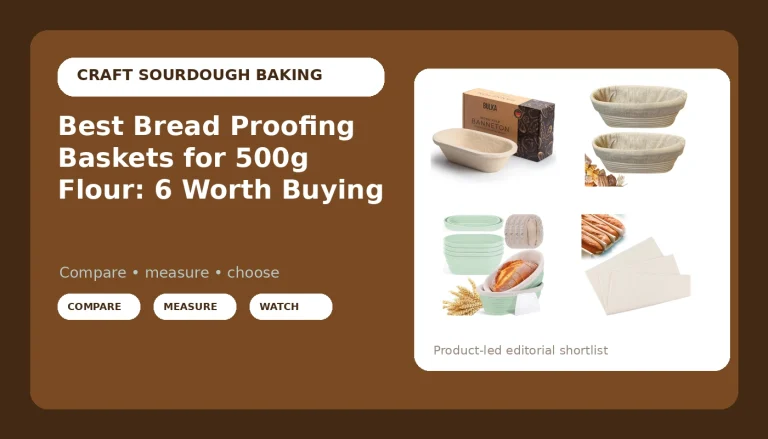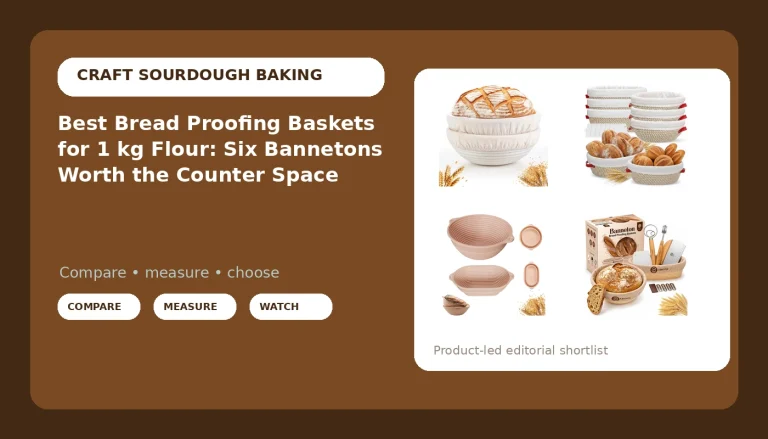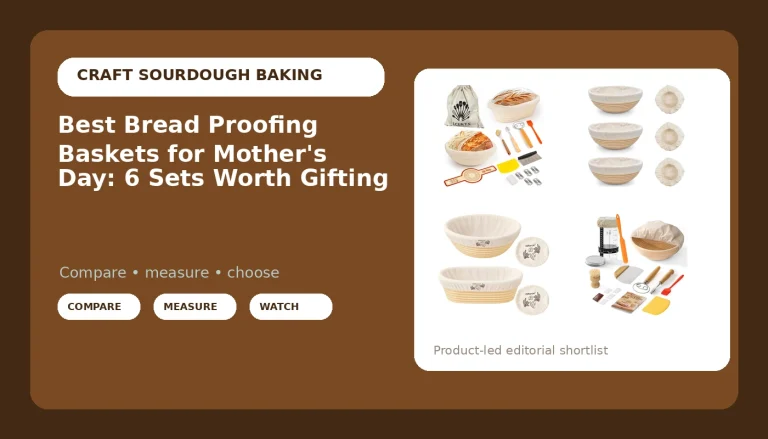
I bought my first banneton in 2016 from a restaurant supply bin in Portland: a nine-inch coiled cane basket, nine dollars, no liner, and a smell like a hayloft that took a month to fade. Nine years and a few thousand loaves later, the questions in my inbox have not changed. Which size, which material, and is a kit worth the extra money over a bare basket. The phrase abioto vs vedalio bread proofing baskets turns up often enough that it deserves a straight answer rather than a bulleted list, so this is the comparison I would give a friend standing in my kitchen with flour on her hands and a dough already two hours into its bulk.
The set to put on your shelf first is the Superbaking round-and-oval pair, because a 9-inch round and a 10-inch oval cover a boule and a batard without buying the same basket twice. The ABIOTO 14-piece kit wins on completeness for a first bake, the BAVIFY set wins if you still need starter-side gear, and the heated proofing box is the only one of the four that solves a cold kitchen instead of a wet dough.
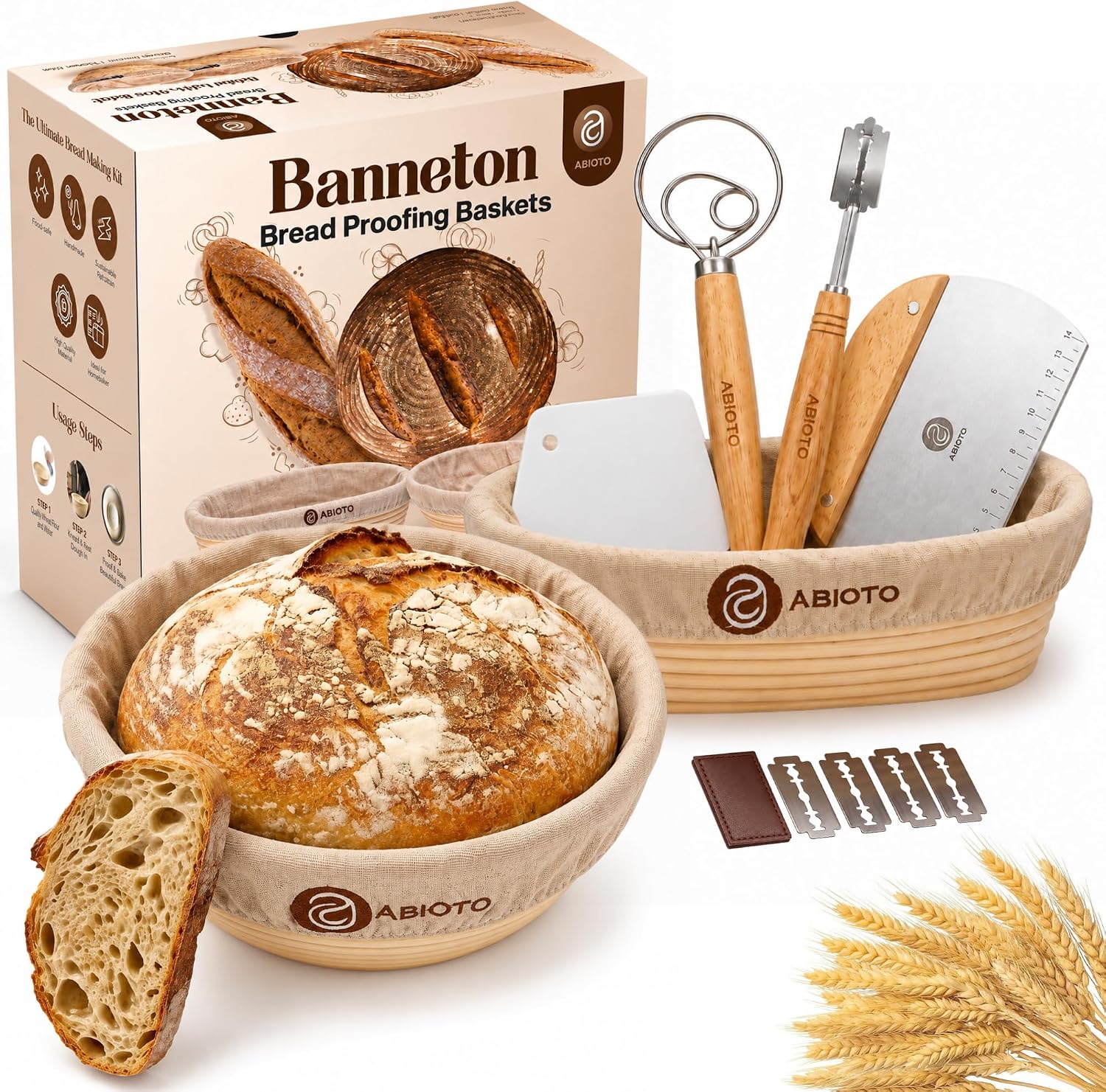
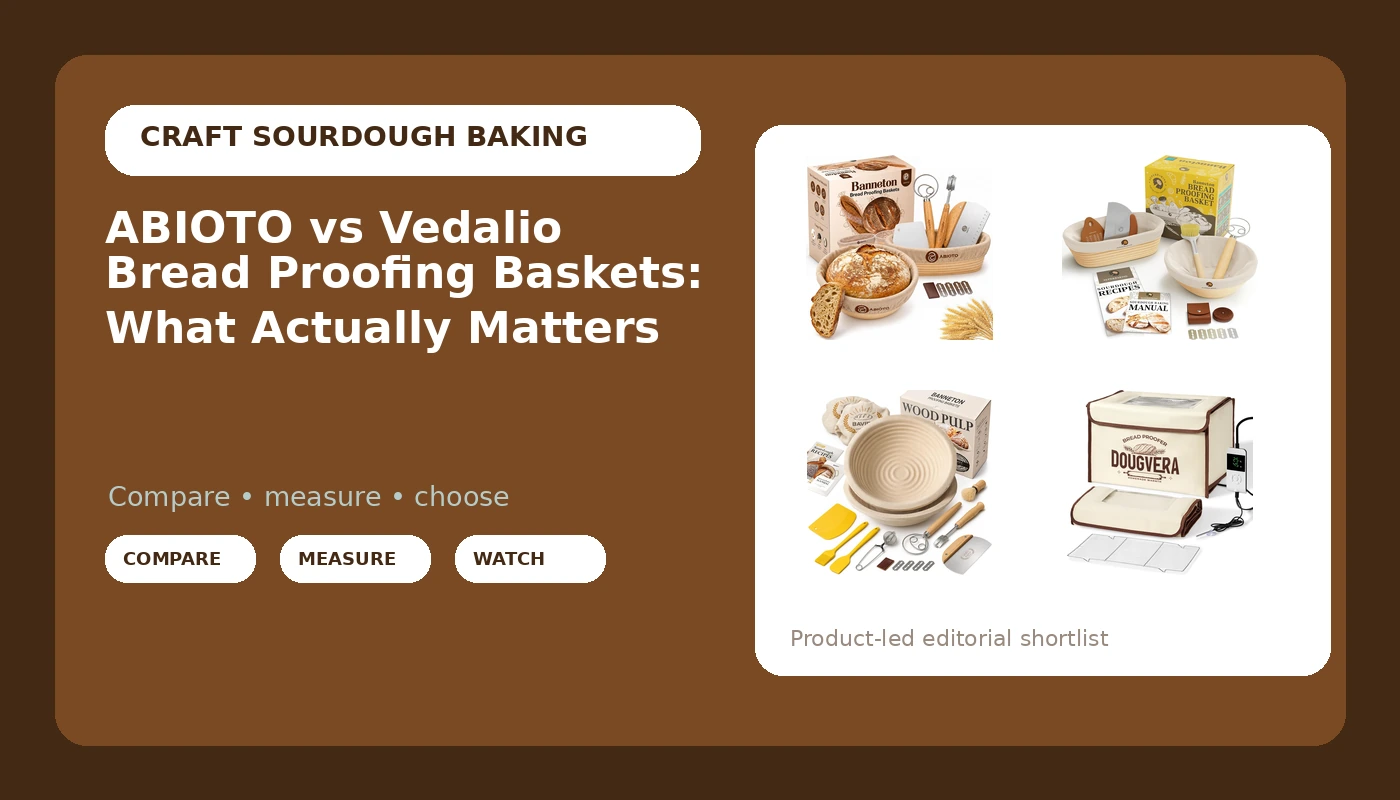
ABIOTO Sourdough Bread Proofing Baskets and Baking Supplies – 14-Piece Kit
One order covers the basket and the small tools, so a first bake is less likely to stall on something missing
Fourteen pieces means fourteen things to store, and in most kits the small tools are the cheapest objects in the box
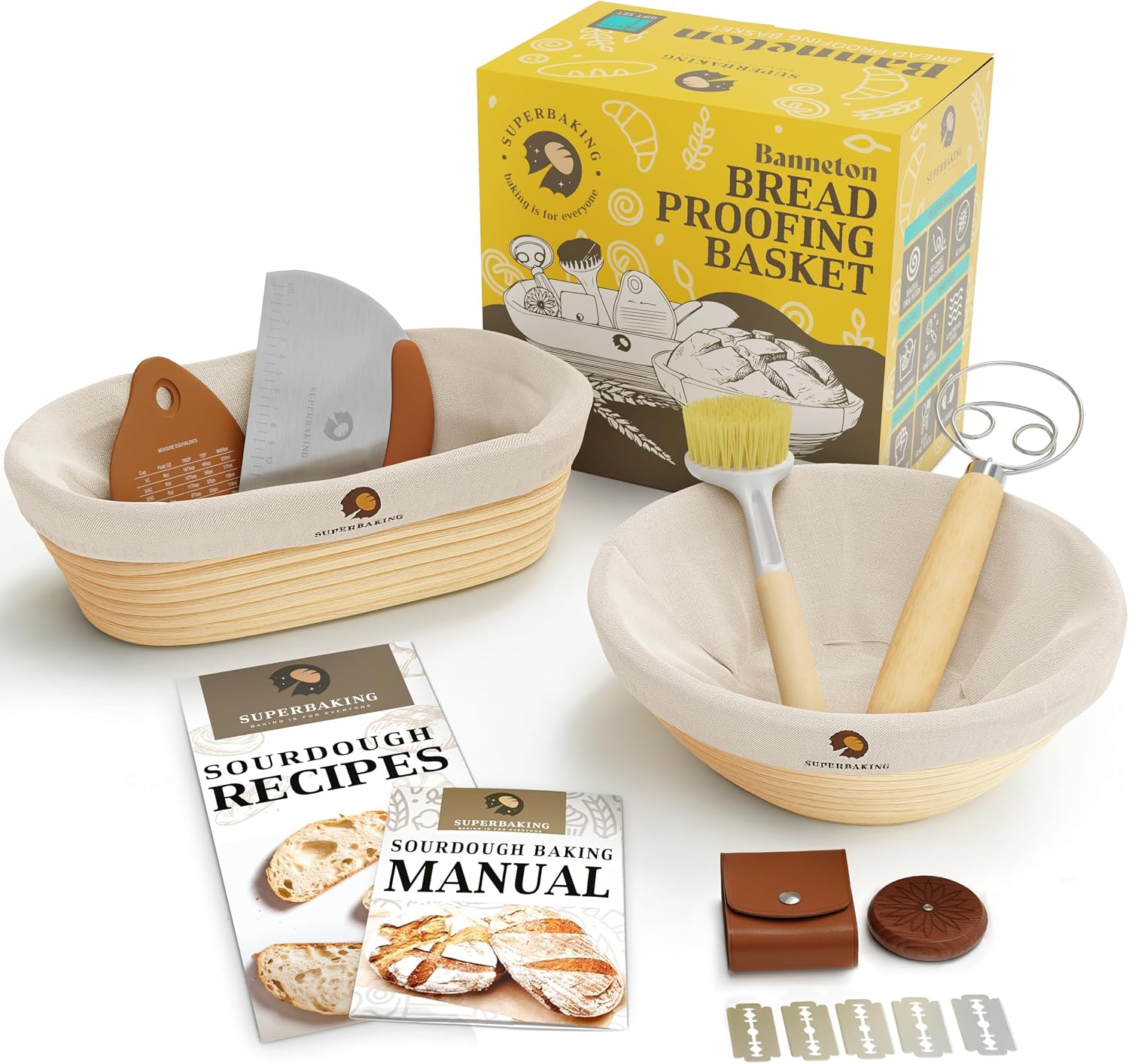
Superbaking Sourdough Banneton Bread Proofing Basket, 9" Round & 10" Oval
Two shapes in one purchase, which covers both a boule and a batard
No cloth in the box, so add a liner before the first bake
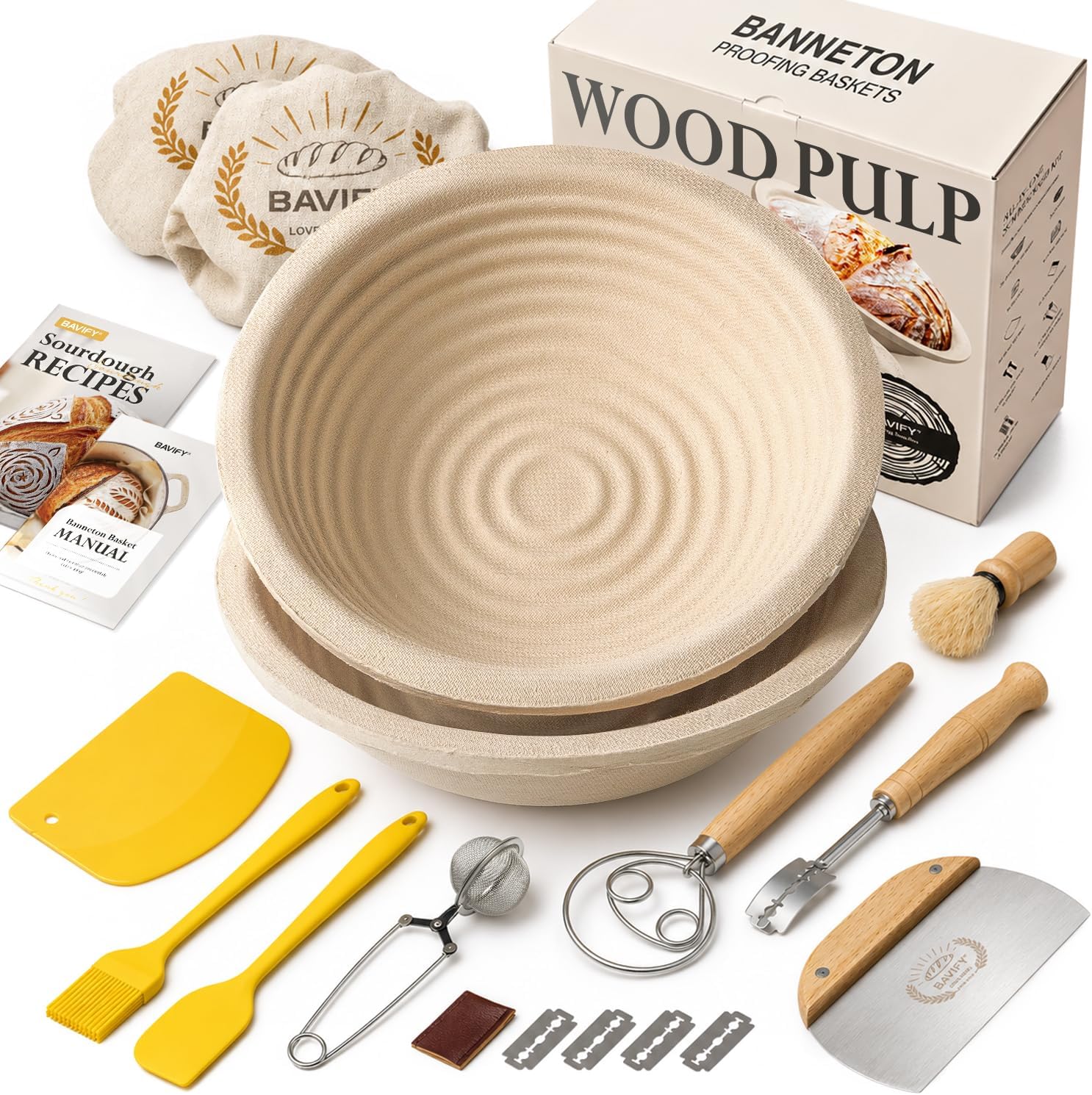
BAVIFY Sourdough Starter Kit, Banneton Bread Proofing Baskets Set
Bundles starter-side gear with the basket, which suits someone who has not baked a loaf yet
Bundles hide their weakest component, and in starter kits that component is usually the jar
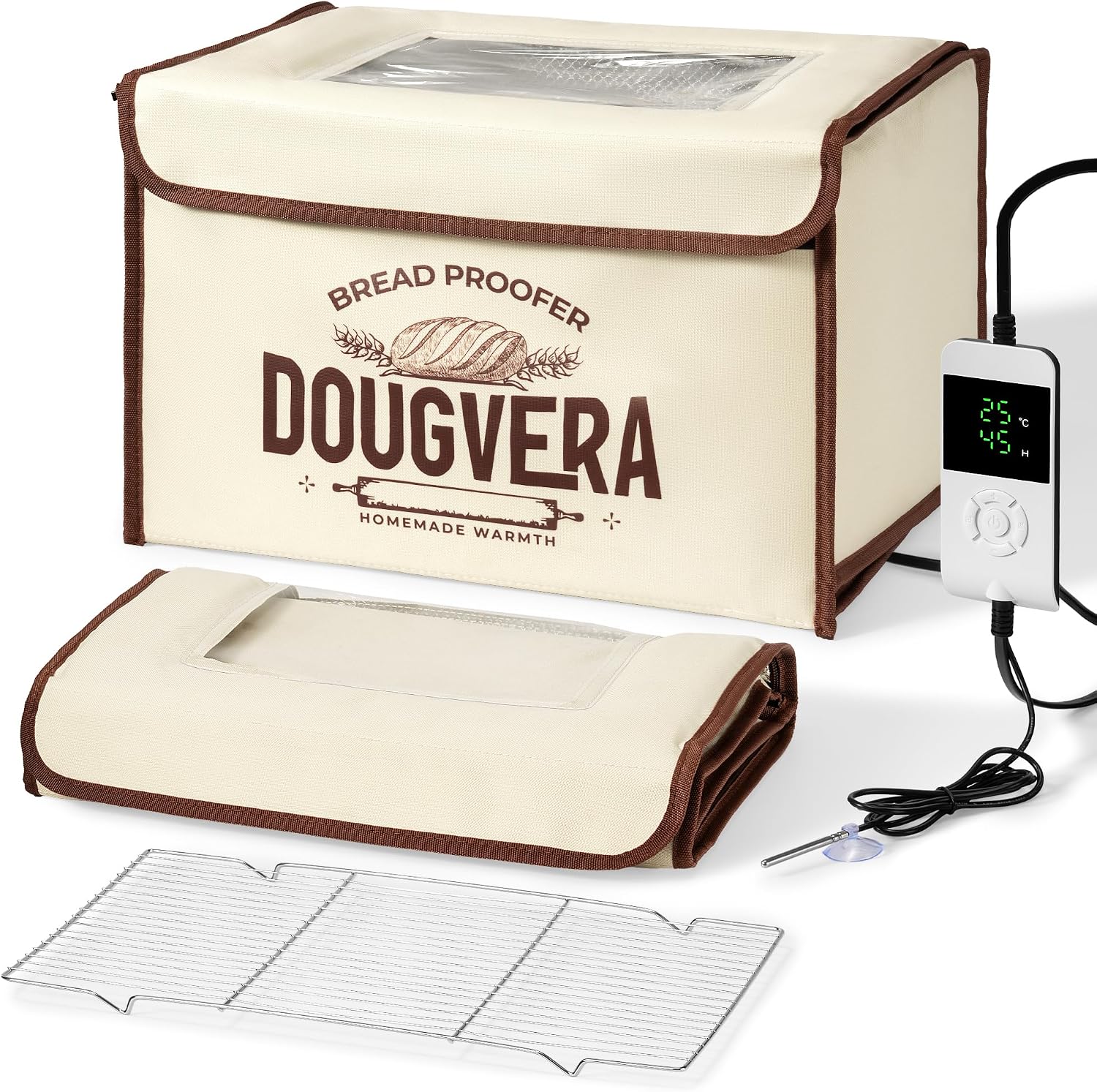
Bread Proofing Box 40 x 30 x 25cm Sourdough Box with Temperature Control, 7Ft Cord, Timer
Holds a set temperature through a cold bulk, which is the one variable a basket cannot fix
It is a box, not a basket, and 40 x 30 x 25cm claims counter space all day
Prices and availability may change.
abioto vs vedalio bread proofing baskets: the four specs that decide it
Brand names are the least interesting part of this comparison. A basket has one job: hold a wet dough through a twelve to twenty-four hour cold retard without going soft, sour, or moldy, and then release that dough onto a peel without tearing the skin you spent ten minutes building. Four specs decide whether it does that job. The cane or pulp it is made from, the coil spacing, whether a liner is in the box, and the dimensions against the loaf you actually bake every week.
The abioto vs vedalio bread proofing baskets search suggests people expect a brand fight. What they end up in is a material fight with a brand label stapled to it. I write only about what a listing actually states: dimensions, material, what is included, and how the thing is meant to be cleaned. If a listing is vague about the coil or the cloth, that vagueness is information too, and it is the first thing I write in the notebook.
How I judge a basket without baking in it
I have not run these four sets through a side-by-side bake. Nobody sent samples, and I am not going to invent a panel of testers or a set of measurements to make a table look authoritative. A tool review without a stated basis is marketing, not a review, so here is the basis: nine years of two-loaf-a-week baking, a starter I have kept alive since 2016, and a spiral notebook full of hydration, room temperature, bulk time, and what the crumb looked like when it came out.
What I can judge from a listing with reasonable confidence is material behavior. Cane breathes and holds a flour crust that keeps dough from sticking. Wood pulp breathes less and dries slower, which matters in a Portland winter. Coated plastic does not breathe at all, and a dough that sits in it through a long retard sweats against the sides. Coil spacing tells you how much flour will end up on the counter. Dimensions tell you whether a 1 kg boule at 78 percent hydration will climb the walls or sit in the bottom third. Those things I can read. Everything else I flag as unknown rather than guess at.
Cane, coil, and the liner question
Bread proofing baskets material durability comes down to two failures: a coil that pulls loose from the rim, and cane that stays damp long enough to grow fuzz. Both are storage problems more than manufacturing problems. A basket that goes back on the shelf while still cool and damp from the fridge will mold, and no material survives that treatment for long. Cane and rattan, dried properly between bakes, will outlast the baker who bought them.
The liner is where these sets split. A cloth liner does three things: it keeps a high-hydration dough from nesting into the coil, it lets you lift a slack dough out without a fight, and it gives you something you can actually wash. A basket sold without a liner is not non-stick, it is a basket that assumes you already own cloth. The Superbaking pair covers two shapes and leaves the cloth to you. The ABIOTO kit and the BAVIFY set both read as complete kits, which is the main argument for either of them over a bare basket.
Bread proofing baskets cleaning effort is the part most listings skip. You do not wash cane. You knock the flour out, set the basket somewhere with airflow, and once a month you can scrub it with a stiff brush and a little white vinegar if it smells like the back of a cupboard. Linen goes in a cold wash and air dries. Anyone who tells you to soak a banneton is selling replacements.
Kits versus single baskets
A fourteen-piece kit lives or dies on the pieces that are not the basket. The ABIOTO set is the completeness play here, and you can check what it currently costs on the listing: Check current Amazon price. One order, and you are not three days into a starter and missing a bench knife. That is worth real money to a beginner and worth nothing to someone who already owns a scraper and a lame. The trade-off is storage and quality distribution. Fourteen pieces means a drawer, and in most kits the basket is the best-made object in the box while the plastic tools are the cheapest.
The BAVIFY set takes a different angle by bundling starter-side gear with the basket. Check current Amazon price on that one if you have not started a starter yet, because it is the purchase here that gets you from a bag of flour to a first loaf in a single order. My reservation is the one I hold about every starter kit: the jar is where the money gets saved, and a thin jar cracks at the shoulder within a season. If the glass arrives feeling light, treat it as a temporary home and move the starter into something heavier.
The heated box is neither a kit nor a basket. It is a temperature-controlled chamber, 40 by 30 by 25 centimeters, with a timer, a seven-foot cord, and heating elements on three sides. In a Portland kitchen in January, that is the difference between a bulk that finishes in five hours and one that stalls overnight and leaves you baking at eleven at night. It is also the only item here that takes up counter space permanently rather than living in a cupboard between bakes.
Storage footprint and the price band
Bread proofing baskets storage footprint is the spec nobody lists, and it is the one that decides whether a basket actually gets used. A nine-inch round stacks inside a ten-inch oval with a cloth between them, which is why the Superbaking pair is easy to live with. Fourteen pieces do not stack, they scatter. If your kitchen has one cupboard for baking gear, the kit is the wrong shape of purchase no matter how good the basket inside it turns out to be.
The bread proofing baskets price band here is narrow on the basket side and wide once electronics enter the picture. What you are really choosing between is a basket, a basket plus cloth, a basket plus starter gear, and a box that happens to hold dough. The band moves with coupons more than with quality, which is why I will not print a number I cannot verify. Check the live price on each listing before you commit.
What the listings promise and what shows up
Most bread proofing baskets reviews are written in the first week, while the basket still smells like a hayloft and nothing has had time to fail. That is not a knock on the reviewers, it is a note on what a star average measures. It measures arrival condition and first impressions. It does not measure whether the coil is still tight after forty bakes, or whether the liner survived its first warm wash.
The top rated bread proofing baskets in any given month are usually the ones with the most reviews, not the best coil, and those are two different things. When I read a listing I look for the complaint that repeats: a coil pulling out of the rim, a liner shrinking two sizes, a lame whose blades snap on the first score. One complaint is noise. Six of the same complaint is a design.
For the heated box specifically, the thing to watch is the thermostat. A box that overshoots by five degrees is worse than no box at all, because a dough that gets too warm during bulk goes from proofed to over-proofed while you are not looking. That is a reading of how the device has to work, not a report on how this one performs, and I would keep a separate thermometer inside it for the first month either way.
Should a beginner buy a kit or a single basket?
For bread proofing baskets for beginners, the answer is usually a kit, and specifically the ABIOTO set, because the failure mode for a new baker is not a bad basket, it is a stalled first bake waiting on a tool that has not arrived. A fourteen-piece box removes that excuse for the price of some drawer space. If you already own a scraper, a bench knife, and a lame, buy the Superbaking pair instead: Check current Amazon price and spend the difference on linen.
The best budget bread proofing baskets are not the cheapest baskets. They are the ones you will still reach for in year three. A nine-inch round cane basket with a linen liner is the whole category in one object, and everything else is a variation on that theme. Any bread proofing baskets buying guide that opens with brand names instead of dimensions is selling something other than a basket.
How to choose bread proofing baskets, in one sentence: match the shape to the loaf you bake most, confirm the material is cane or pulp rather than coated plastic, and make sure a liner is either in the box or already in your drawer.
What I am watching next
The heated box is the one item here I would like in my own kitchen in February, when the house sits at 64°F and my bulk times stretch past eight hours. Whether the thermostat holds within a degree or two is the whole question, and it is a question no listing can answer. That one is worth a look if your problem is temperature rather than equipment: Check current Amazon price.
The rest of it is settled ground. A basket holds dough, a cloth keeps the dough out of the coil, and a dry shelf keeps both alive for years. abioto vs vedalio bread proofing baskets is a search phrase, not a decision. The decision is shape, material, and whether the box you buy comes with the cloth you need.
I will keep updating this page as I get hands on more of these sets, and the notebook entries will go in as they happen, hydration and room temperature included.