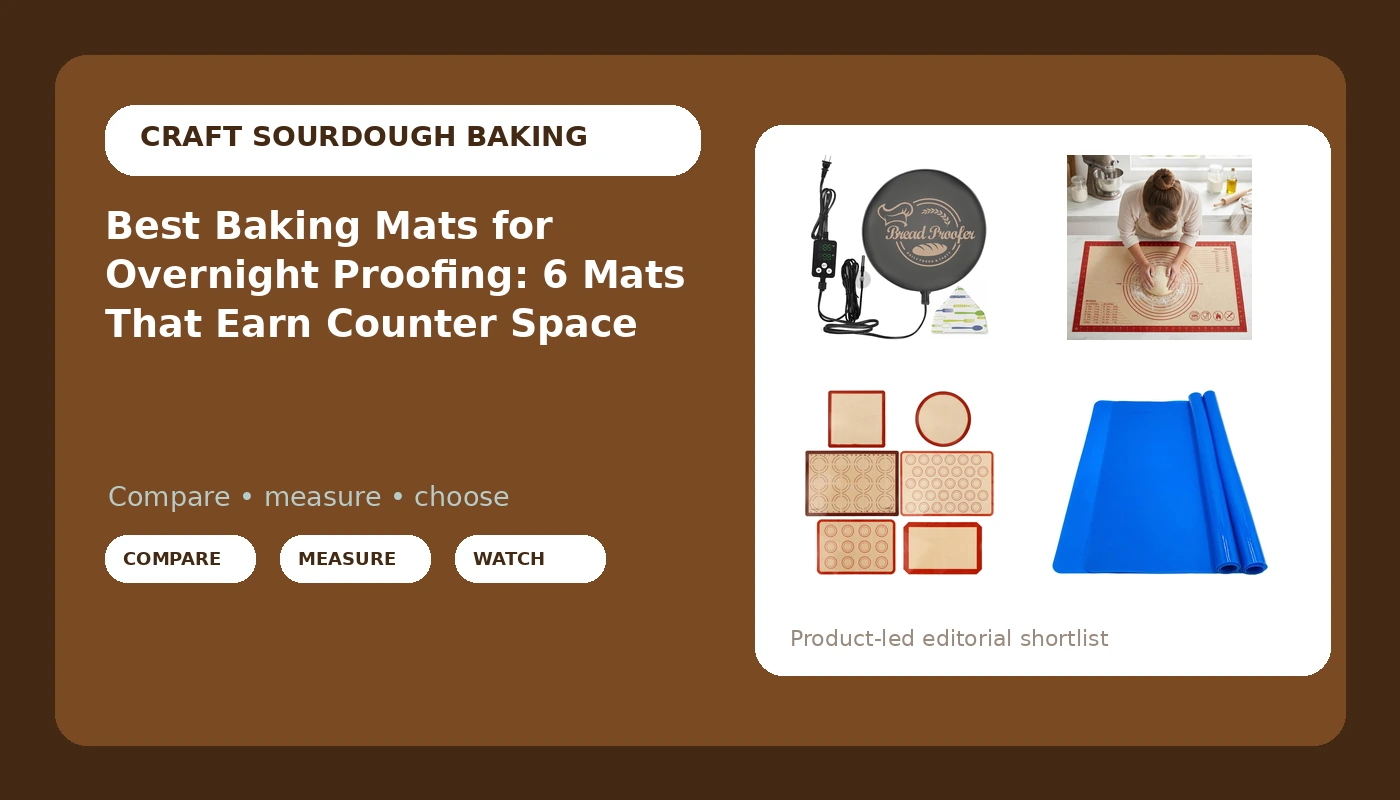
Overnight proofing is the step where a good bake is quietly won or lost, and the surface under the dough is part of that. A mat that grips the counter, releases a wet high-hydration dough in the morning, and washes clean without curling at the edge earns its place in the rotation. One that slides, creases, or holds a smell does not. This guide to baking mats for overnight proofing sorts what is currently sold for that job by what each piece is actually built to do: enclose a dough through a cold retard, give you a measured surface to shape on, line a baking tray, or carry a loaf into a hot Dutch oven.
Quick answer
The Bread Proofing Mat with Digital Temperature Control & Timer and Cover is the strongest fit for an overnight cold retard because it is the only mat in this group that pairs a proofing surface with a cover and a temperature and timer readout, so the dough sits enclosed while you track the conditions around it. Choose the Silicone Pastry Mat with Measurements, 26 x 16 Inch Extra Thick Non-Slip Nonstick Large Baking Mat for Dough Rolling, Kneading, Fondant and Pie, Red instead when your overnight step happens in a banneton and what you need on the counter is a large measured surface for shaping in the morning.
What is worth comparing in baking mats for overnight proofing
Four different products get sold under the same three words, and buying the wrong one is the most common mistake that baking mats reviews keep repeating. There is a proofing mat, meaning the sheet the dough sits on, sometimes with a cover, for bulk or for the final rise. There is a rolling and shaping mat, a measured non-slip surface for the bench. There is an oven liner, a sheet that sits on a baking tray. And there is a sling, the round silicone cradle with handles that lowers a loaf into a preheated Dutch oven. A 20 by 16 inch counter mat is excellent for shaping and useless for lifting a boule into a hot pot.
Size is the second comparison, and it is decided by the loaf rather than by the counter. A 1 kg boule plus the seam allowance of a shaped dough wants a working surface wider than the dough by a hand's width on every side, which puts a 26 by 16 inch mat in a different class from a 20 by 16 inch one. Round mats are cut for cake pans and small pastries, not for a bâtard. A sling has to match the pot: too small and the loaf folds over the edge, too large and the handles drape into the heat.
Grip and thickness matter more than colour, though colour is what gets photographed. A non-slip backing is what lets you shape a wet, slack dough without chasing the sheet across the counter, and that is the whole argument for the baking mats no knead loaves depend on: no folding, no bench flour, no scraping. Thickness is about durability and heat, not cushioning, and an extra thick sheet resists the curl that thin liners develop after a dozen washes.
None of this creates baking mats oven spring. Spring comes from fermentation timing, shaping tension, and steam, and the mat's only job is to stay out of the way. Where a mat does touch baking mats steam baking is at the Dutch oven: the sling is the piece that gets a proofed loaf into a hot pot without a burn, and the steam itself comes from the covered pot. Baking mats bread crust by insulating the base of a loaf slightly, which is why a liner under a free-form loaf is a different decision from a liner under a tray of cookies.
The last comparison is parts count. A plain sheet is one thing to wash. A covered proofing mat with a controller is several, and it needs a flat home between bakes. That is not a reason to avoid it, but it is a reason to know before you buy.
Top pick
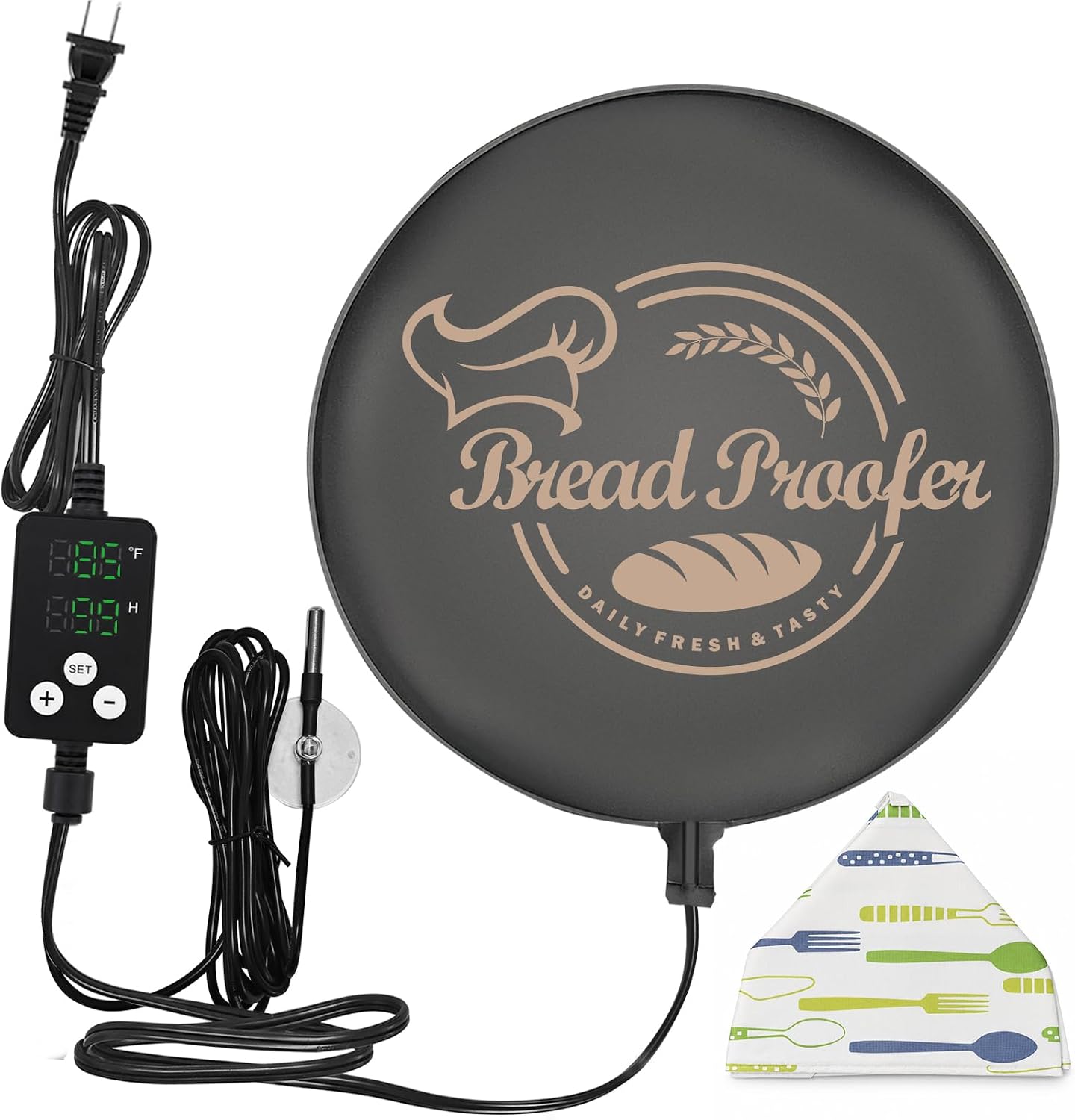
Bread Proofing Mat with Digital Temperature Control & Timer and Cover
A proofing mat with a digital temperature readout, a timer, and a cover, so a dough can sit enclosed while you track time and temperature around it.
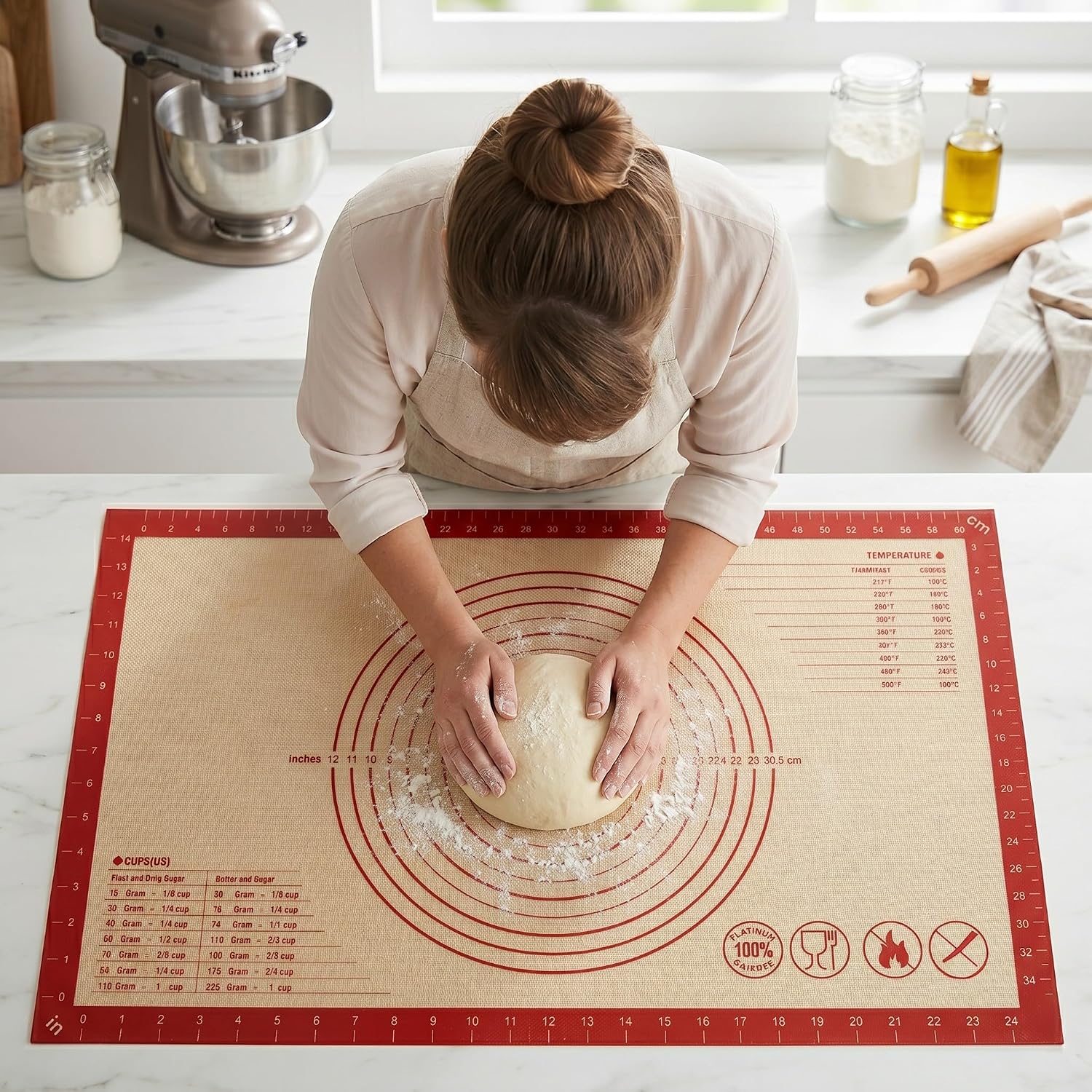
Silicone Pastry Mat with Measurements, 26 x 16 Inch Extra Thick Non-Slip Nonstick Large Baking Mat for Dough Rolling, Kneading, Fondant and Pie, Red
A 26 by 16 inch extra thick non-slip mat printed with measurements, sized for rolling, kneading, fondant, and pie work.
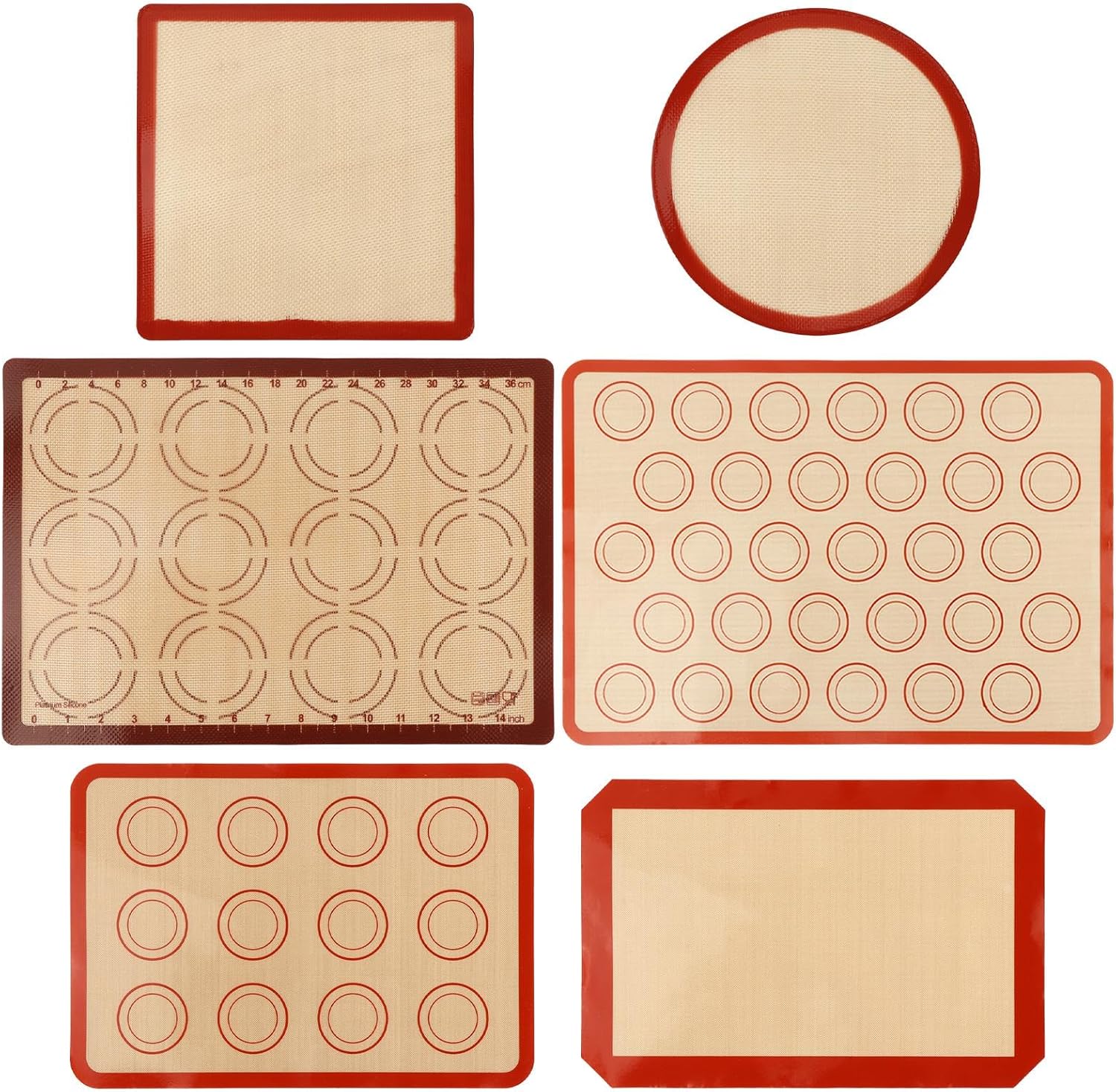
Silicone Baking Mat Set of 6, Non-Stick Reusable Food Grade Silicone Pastry Mat, Multi Size Rolling Dough Oven Liner Sheets, Round & Square Baking Mats for Macaron, Cookie, Pizza & Bread
A six piece set of reusable non-stick mats in multiple sizes, including round and square sheets for macarons, cookies, pizza, and bread.
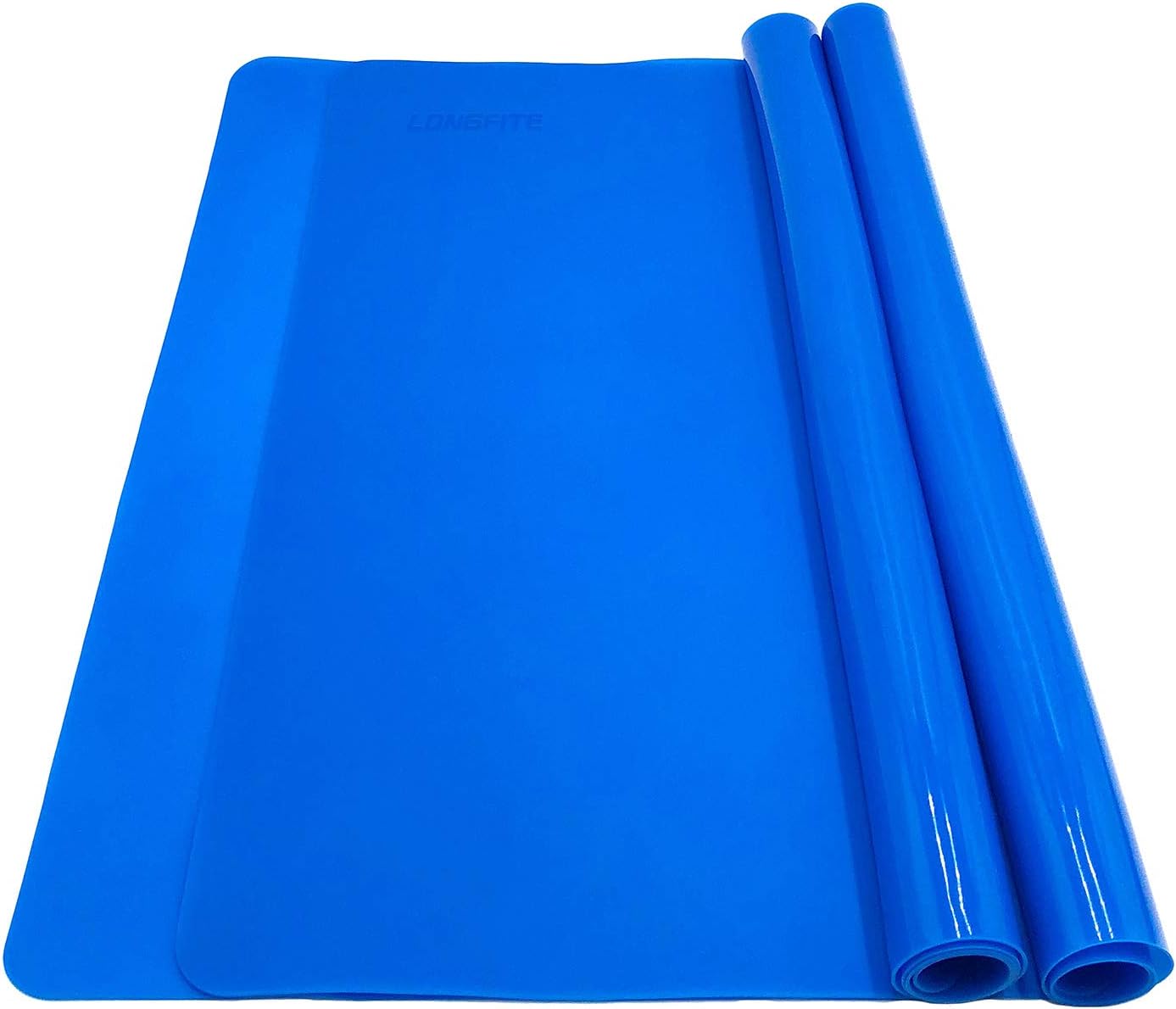
Silicone Baking Mats for Dough Rolling Pastry Fondant Mat Large Nonstick and Nonslip, Countertop Protector, Dining Table Mat and Placemat 20'' by 16''(Blue 2 Pack)
A two pack of 20 by 16 inch non-slip mats that doubles as a countertop protector and a placemat away from the bench.
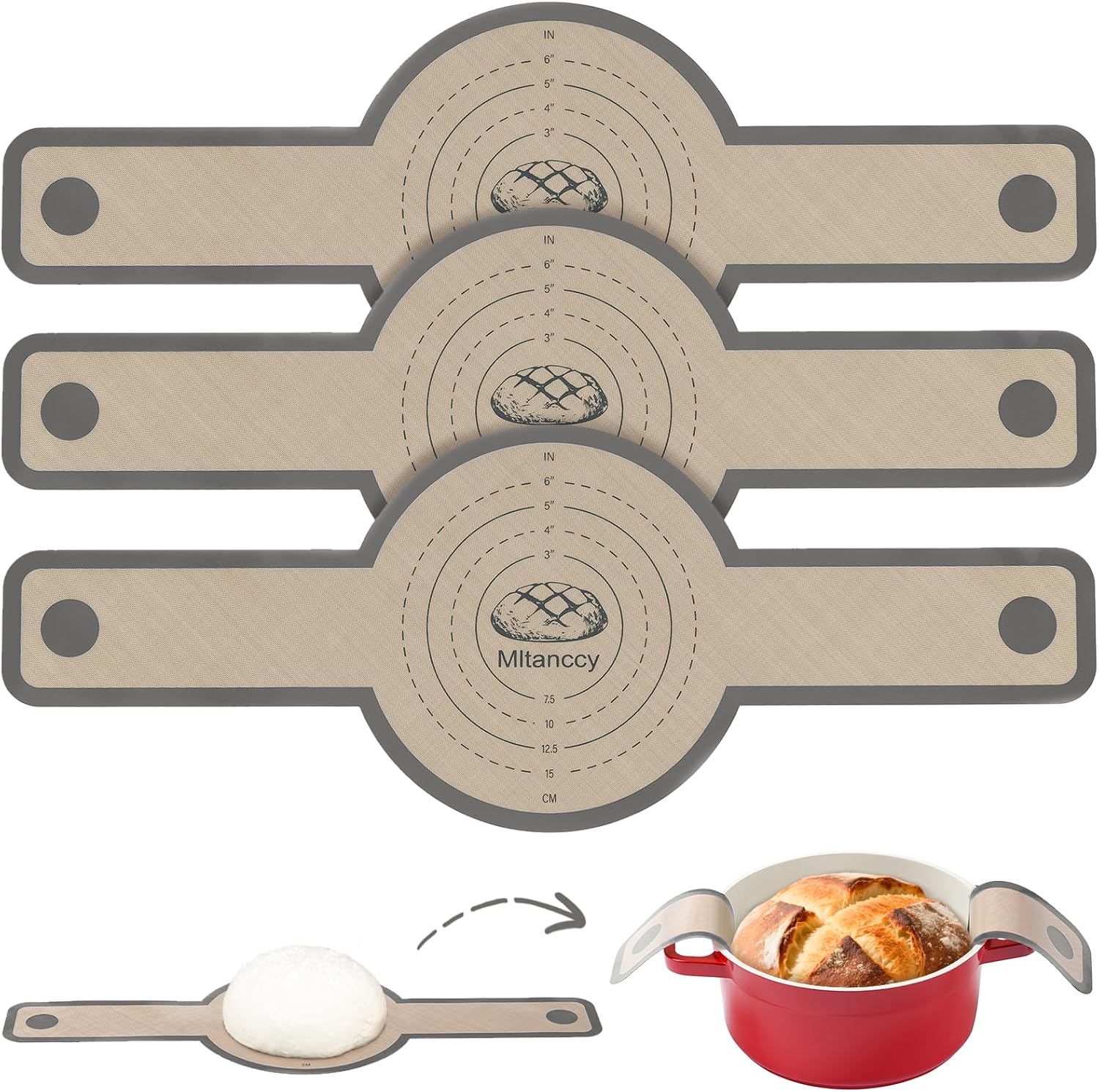
3 PCS Silicone Bread Sling for Dutch Oven Liners, Round
Three round silicone bread slings sized as Dutch oven liners, for lowering a proofed loaf into the pot and lifting it back out.
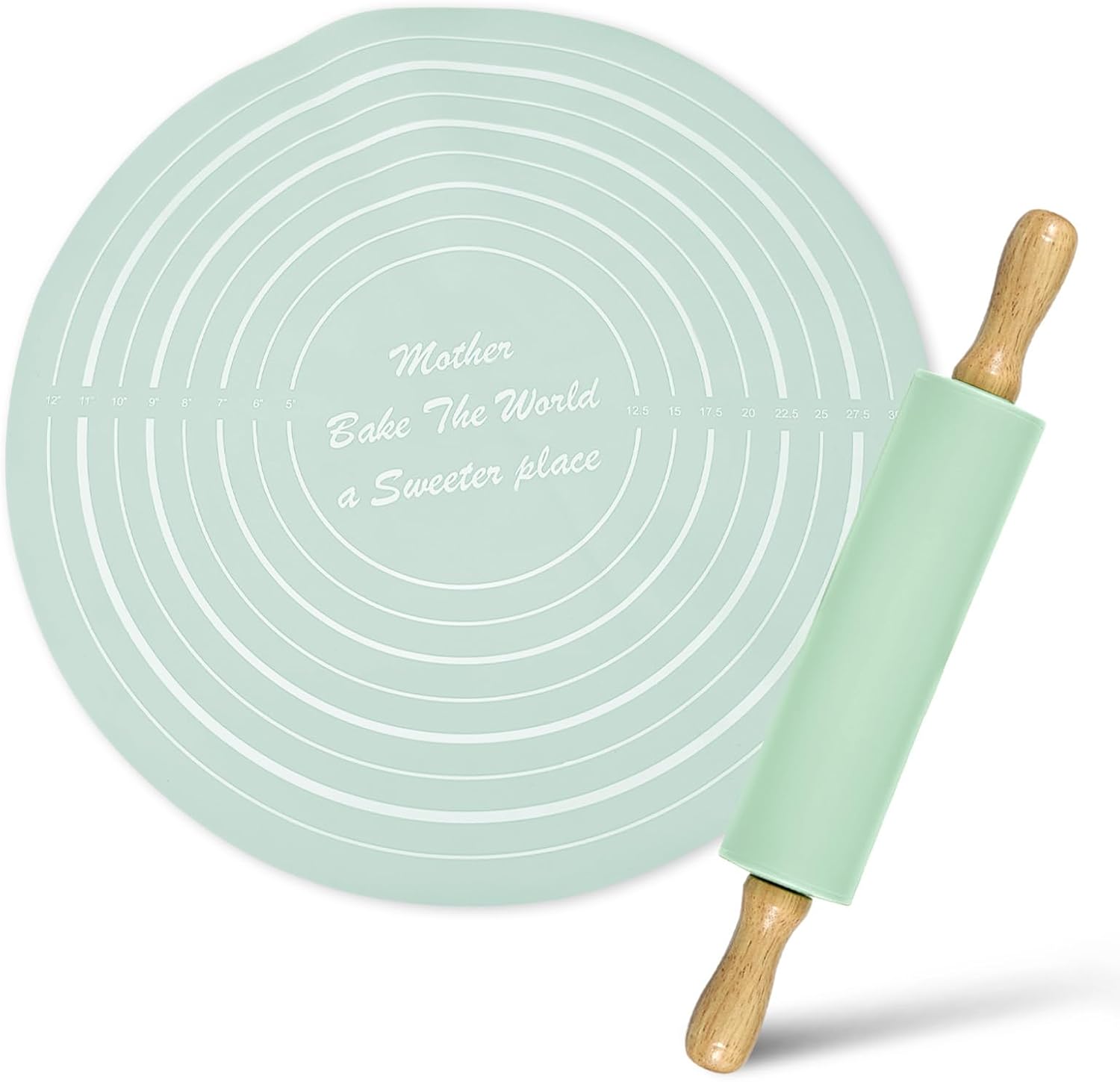
Silicone Rolling Pin Backing Mat Set, 13" Dough Roller with Non Stick Pastry Sheet, Small Fondant Roller Round Kneading Mat for Bread Cookie Pie Pizza Sourdough Kitchen (Mint Green)
A 13 inch silicone rolling pin with a round kneading mat in mint green, sold as a small set for bread, cookie, pie, pizza, and sourdough work.
How these products were compared
This guide compares listed dimensions, material and food-contact claims, surface grip as the maker describes it, how each item is meant to meet heat, and how much cleaning and storage it creates. There are no lab numbers here and no panel, no measured bake-off, and no timed release test, because none of that happened. The basis is the product listings plus the failure patterns that baking mats reviews repeat across a category, and where a listing is silent on something, this guide says so rather than guessing. Product names, images, and retailer links are matched so that every card points to the product shown.
That basis is enough to sort the best baking mats for overnight proofing from the ones that only photograph well, because the differences that decide a cold retard are visible in the specifications: does it cover the dough, does it grip, is it big enough for a shaped loaf, and how many pieces end up in the sink. Where two listings are close, the tie goes to the simpler object.
How to choose the right baking mat
Start with the step, not the material. If your overnight proof happens in a banneton in the fridge, the mat you need on the counter is a shaping surface for the morning, and a plain measured sheet does that job well. If the dough proofs on the counter overnight, an enclosed mat with a cover is the closer fit, because a bare sheet does nothing about a dry kitchen or a draft. If the plan is a Dutch oven bake, the sling changes bake day more than any counter mat will. A banneton and proofing basket guide is the better place to start if the basket itself is still undecided.
Then measure. A 26 by 16 inch mat covers most of a standard counter run and is the size that suits a bâtard plus a rolling pin, while a 20 by 16 inch mat fits a smaller kitchen and stores more easily in a drawer. If the mat will live on the counter permanently, check the footprint against your prep space rather than against the photo.
The short version of how to choose baking mats: buy for the step you do most often, not for the one you read about. For baking mats for beginners, the safest first purchase is a plain measured sheet with a non-slip back, because it is useful for shaping, rolling, and resting dough and has nothing electronic to fail. The best budget baking mats are usually the plain multi-packs, where the money goes into surface area rather than into printed decoration. Thicker is more durable, but an extra thick sheet is also heavier to wash and slower to dry.
Finally, think about heat. A mat sold as a counter and pastry surface is a counter and pastry surface. A mat sold as an oven liner is for the tray. A sling is for the pot. Reading which of the three a listing is actually claiming is most of this baking mats buying guide in one sentence.
Bread Proofing Mat with Digital Temperature Control & Timer and Cover
This is the one product in the group built specifically around the overnight step rather than around the bench. The listing describes a proofing mat with digital temperature control, a timer, and a cover, which addresses the two things a cold retard actually needs: a dough kept enclosed so it does not skin over, and a record of the time and temperature it sat in. In a kitchen that swings overnight, a readout is more useful than a guess, and the timer means the retard has a start time you can read instead of reconstruct from memory.
The trade-off is parts. A cover, a mat, and a controller are three things to wash and store, and the controller means this is a countertop tool rather than something that goes into the oven or under the broiler. It also cannot control your refrigerator. What it can do is tell you what the dough was sitting in, which is the number you want in a bake log when a loaf comes out flat and you are trying to work out why. If you already keep notes on hydration, room temperature, and bulk time, this slots into that habit. If you do not, the cover alone is the part you will use every night.
Alternatives to consider
The Silicone Pastry Mat with Measurements, 26 x 16 Inch Extra Thick Non-Slip Nonstick Large Baking Mat for Dough Rolling, Kneading, Fondant and Pie, Red is better suited to bench work on bake morning, where the printed measurements and the larger footprint matter more than a cover, while the Silicone Baking Mat Set of 6, Non-Stick Reusable Food Grade Silicone Pastry Mat, Multi Size Rolling Dough Oven Liner Sheets, Round & Square Baking Mats for Macaron, Cookie, Pizza & Bread is a stronger fit when you want tray liners and pan mats for the rest of the baking week as well as a rolling sheet.
The Silicone Baking Mats for Dough Rolling Pastry Fondant Mat Large Nonstick and Nonslip, Countertop Protector, Dining Table Mat and Placemat 20'' by 16''(Blue 2 Pack) covers the smaller counter and the two-mat rotation, so one can be drying while the other is in use, and it doubles as a table protector when the bench is full. The 3 PCS Silicone Bread Sling for Dutch Oven Liners, Round solves the part of bake day that burns wrists: it is the piece that lowers a proofed loaf into a preheated pot and lifts it out again, and having three means one can be in the wash. The Silicone Rolling Pin Backing Mat Set, 13" Dough Roller with Non Stick Pastry Sheet, Small Fondant Roller Round Kneading Mat for Bread Cookie Pie Pizza Sourdough Kitchen (Mint Green) is the smallest footprint of the group, a rolling pin and a round kneading mat for someone who works in a tight kitchen and rolls rather than stretches.
A five piece set with round and square pan mats and a silicone brush is also sold in this category; it overlaps the six piece set closely enough that one of the two is plenty. The top rated baking mats in this particular group tend to be the plain sheets, and that is fair: they have the fewest ways to go wrong.
Day-to-day use and maintenance
Silicone is easy until it is not. Wash mats in warm soapy water, rinse, and dry flat or hang them; a mat put away damp will smell like the inside of a bread box within a week. Store the large sheets rolled loosely rather than folded, because a hard crease becomes a permanent ridge that a rolling pin catches on. Keep bench scrapers, knives, and any sharp edge off the printed side of a measured mat, since the markings are the first thing to wear.
For a mat with a cover and a controller, wash and dry the cover fully before it goes back on, and keep the controller away from the sink. For a sling, check both handles before you lift a hot loaf out of a Dutch oven, and use dry mitts rather than a damp towel. Silicone picks up strong smells from doughs with onion, garlic, or heavy spice, so keep one mat for those and one for pastry if that matters to you.
One care caveat worth stating plainly: heat ratings vary by product and the listing is the only reliable source. Do not assume a counter mat is broiler safe, and do not put a controller anywhere near the oven.
Buying checklist
- Measure the counter run and the drawer or cupboard where the mat will live, and check the footprint against both.
- Decide whether the overnight step happens on the counter or in a banneton, then buy for that step.
- Choose the size from the loaf you bake most often, not from the largest one you might bake once.
- Confirm the exact listing includes the feature you are buying it for, whether that is a cover, printed measurements, or pot handles.
- Read the cleaning and heat instructions before the first use, not after.
- Verify the current retailer price, availability, and return terms through the link on the card.
Final recommendation
Choose the Bread Proofing Mat with Digital Temperature Control & Timer and Cover when the dough spends the night on the counter and you want it enclosed with the time and temperature recorded. Choose the Silicone Pastry Mat with Measurements, 26 x 16 Inch Extra Thick Non-Slip Nonstick Large Baking Mat for Dough Rolling, Kneading, Fondant and Pie, Red when the cold retard happens in a basket and the counter mat is for shaping. Add the 3 PCS Silicone Bread Sling for Dutch Oven Liners, Round if you bake in a Dutch oven, because that is a different problem from proofing and no counter mat will solve it. For everything else, the plain multi-packs cover the baking week without adding parts to wash.