Nine years of baking two loaves a week taught me that a dish towel is a tool, not decoration, and this dish cloths & dish towels size guide is the version of that lesson I wish I had owned in 2016. My neighbour handed me a jar of starter with a rubber band around the lid and a thin cotton cloth over the top, and within a month I had ruined two decent bath towels trying to cover a bulk bowl. Wet dough either sticks to the wrong cloth or the cloth sheds fibres into the crust, and both failures come down to the same thing: nobody tells you what size the cloth should be.
Size is the part almost nobody writes about. Most dish cloths & dish towels reviews argue about absorbency in the abstract, so treat this as the short form of a dish cloths & dish towels buying guide: match the dimension to the job first, then worry about the weave. Lining a banneton, covering a rising bowl, wiping flour off a bench, and wringing out a starter jar are four jobs at four different scales, and a single set bought to do all of them is how a drawer fills up with towels that do none of them properly. Here is how I keep my starter alive if you want the other half of the setup.
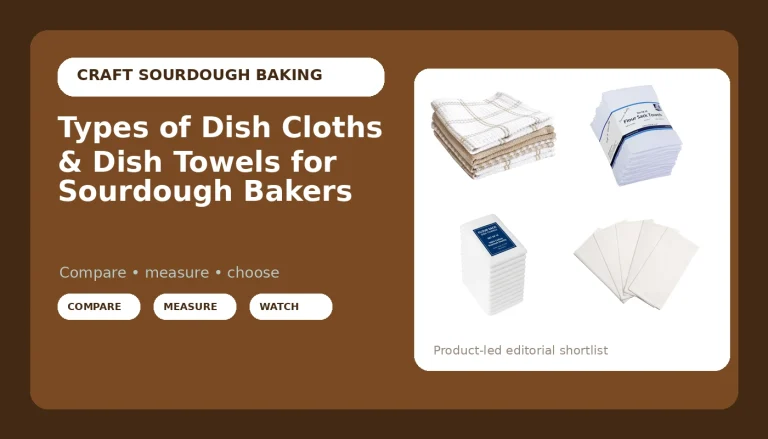
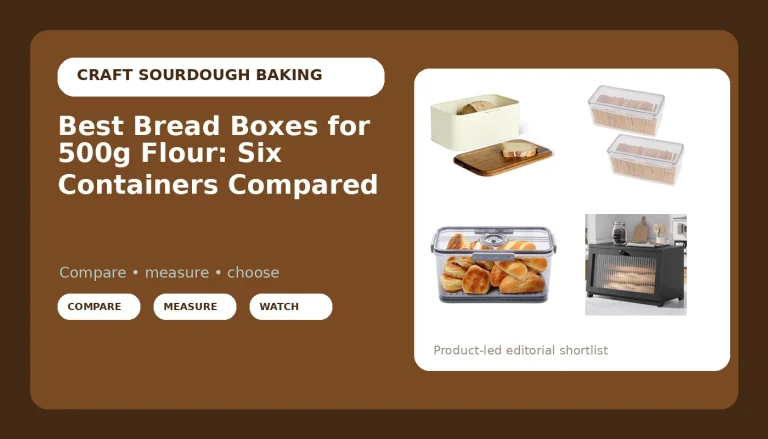
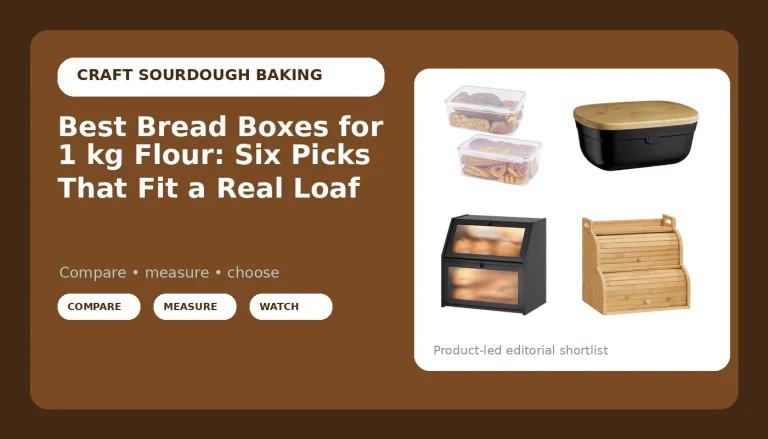
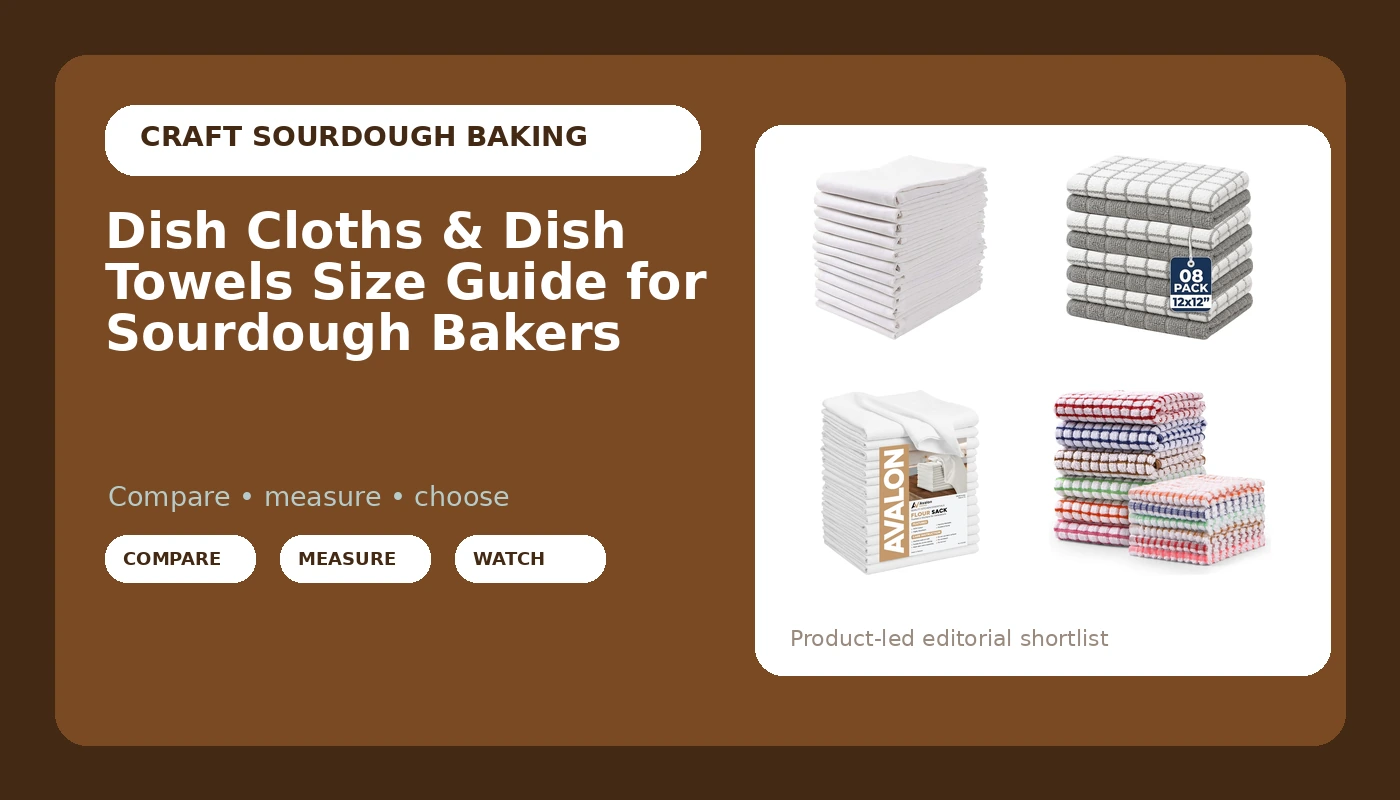
Best Overall: Flour Sack Dish Towels, 12 Pack, 28×28
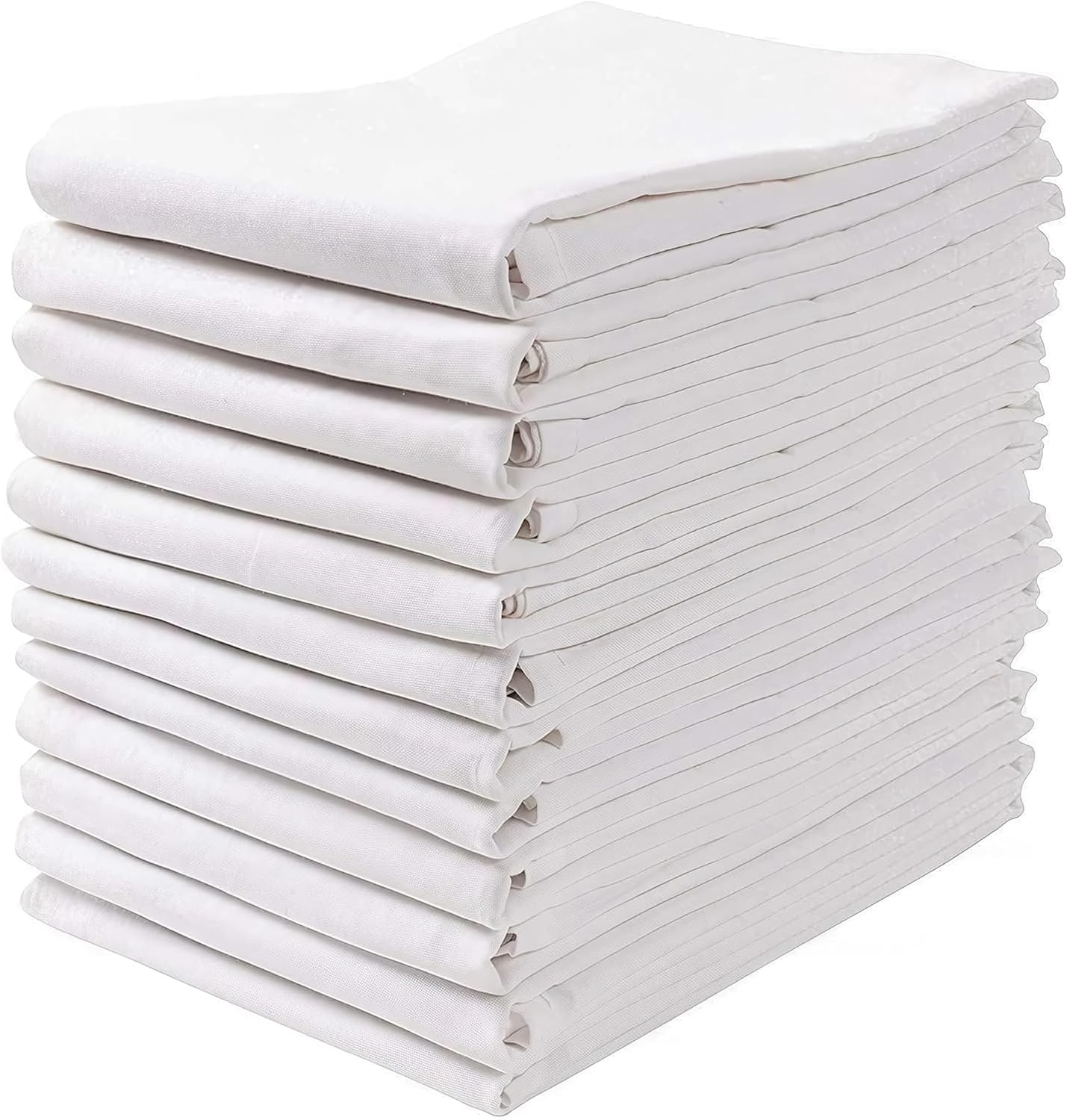
This is the set I would put in the hands of anyone who asks me what to buy first. Twenty-eight inches square is the dimension that does the most jobs in a sourdough kitchen: a cloth this size drapes a large mixing bowl with enough overhang to tuck under, lines a nine inch banneton with the corners folding flat instead of bunching in the middle, and still folds down small enough to sit over a dough ball as a bench cover while it rests.
Flour sack cotton is what makes the size usable. It is a plain weave, thin and quick to dry, with no terry loops to catch on a wet dough surface or work loose into a scored loaf. Damp flour sack cloth also grips a bowl rim a little, which matters when the bowl has to sit out for six hours and you do not want the cover sliding off at hour four. The listing calls the set lint free. Plain weave cotton like this sheds far less than terry, and whatever it does shed goes away after the first two or three washes.
The trade-offs are real and they are not hidden. White cotton stains. Starter hooch, turmeric, a forgotten blackberry, cocoa in a rye loaf: all of it leaves a mark, so if a towel has to still look new in March, buy grey instead. Flour sack also shrinks on the first hot wash, so plan on the size it will be after laundering rather than the number on the label. And it is not a potholder. A folded flour sack towel is a liner and a cover, not protection from the lid of a 500°F Dutch oven.
Twelve towels earns its keep. My rule is one job per towel per day: proofing cover, banneton liner, dish drying, bench wipe. Twelve lets me get through a full week of baking before I run a linen wash.
Best Value: Bumble 12"x12" Dish Cloths (8-Pack)
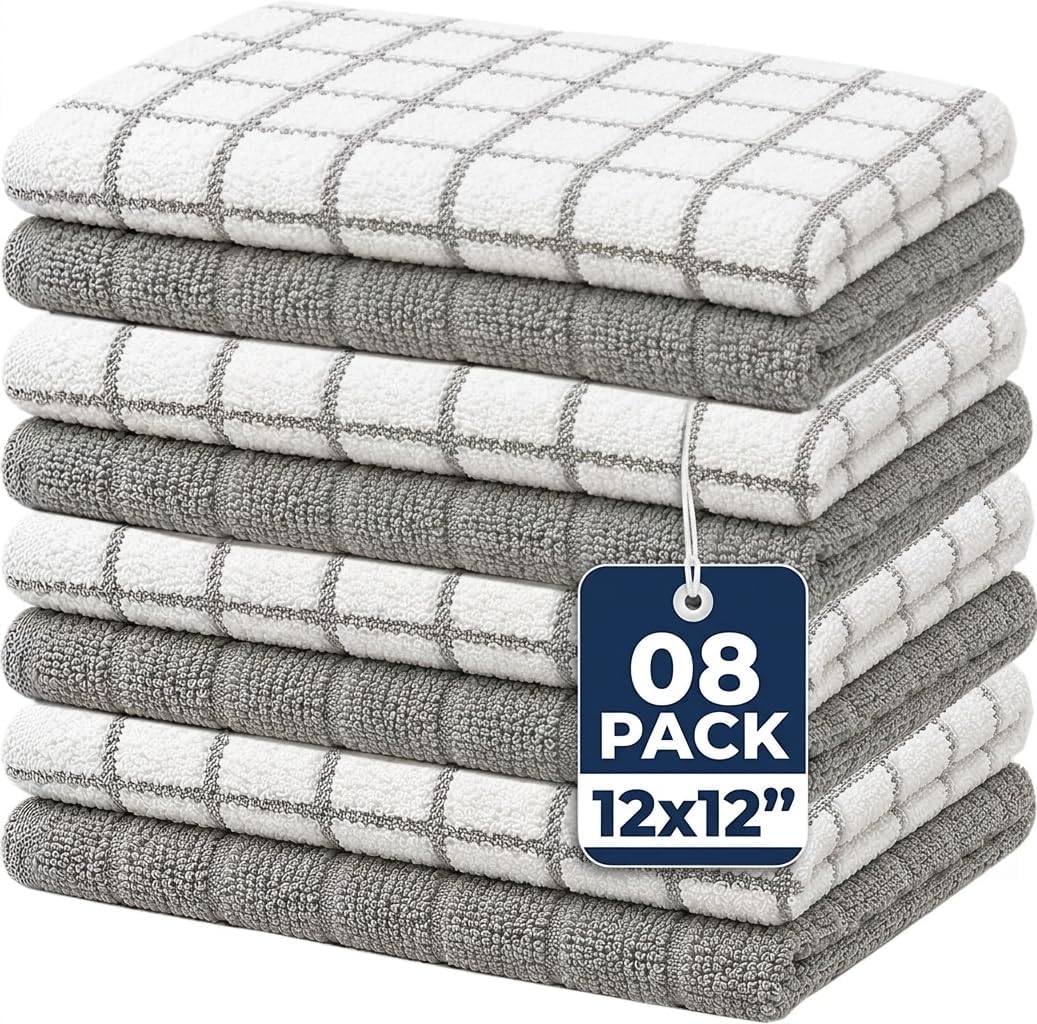
Twelve inches square is not a dish towel. It is a dish cloth, and once you accept that, this eight pack is the best budget purchase in the group. A 12×12 cotton square is the right size for wiping a bench, scrubbing dried starter off the shoulder of a jar, washing dishes, and mopping up the flour that drifts onto the floor every time I shape. It is small enough to wring out with one hand and cheap enough that I do not baby it.
Grey is the point. A white cloth used for wiping is a white cloth stained by Thursday, and grey hides the flour and water paste, the coffee, the bit of burnt bottom from the pan. The cotton is a flat weave with a hemmed edge, which is the right construction for wiping, because terry is better at soaking and worse at everything else: it leaves fibres behind on glass and on the rim of a proofing basket.
Where it loses is coverage. A 12×12 cloth will not line a banneton, will not cover a mixing bowl, and will not wrap a loaf to carry. It is a wiping tool and a wiping tool only. If you want one set that does dough work, this is not it, and buying it for that job is how people end up with eight small cloths and no bowl cover on a Sunday morning.
Pair it with a 28×28 set and you have the two sizes that cover the whole kitchen. Buy it alone and you have a very good wiping cloth and nothing to proof with.
How I tested
I do not have a lab, and I am not going to pretend a cotton square needs one. What I have is nine years of baking two loaves a week, a starter that overflows if I look away, and a hard rule that every cloth earns its drawer space or gets demoted to the rag bag. The top rated dish cloths & dish towels on a product page rank by volume, not by whether the cloth lines a banneton, so I ignore the ranking and look at the dimensions and the weave.
I judged each set on four things, in this order.
First, finished size after a hot wash, because every cotton towel in this category shrinks and the label number is not the number you live with. Second, what the weave does with water: how fast it takes up a spill, how fast it dries on a line, and whether it leaves a film on a glass. Third, how it behaves around dough, which is really a question about lint and sticking. Fourth, whether it survives a bleach wash, because white cotton used for starter and dough will need one eventually.
The banneton test settles most arguments. A towel either lines a nine inch proofing basket with corners that fold flat, or it bunches in the middle and the dough catches on the folds when you tip it out. Size decides that before material does. If you are still working out what fits inside the basket, my notes on banneton sizes and liners cover the dimensions side.
I also asked the boring questions. Does the hem hold after ten washes? Does the colour survive? Does the set arrive with enough pieces to run a week of baking without a laundry emergency? Those three answers matter more than the absorbency claim on any listing, which is usually written by someone who has never had to lift a wet cloth off a rising bowl.
Nothing here is a lab result. It is what daily use tells you about plain weave cotton, and what the dimensions in each listing mean for a one kilogram boule.
Analysis and test results
Here is how to choose dish cloths & dish towels when the drawer is already full of the wrong ones: start with the biggest job, not the smallest.
The biggest job is covering dough. A bowl of dough at 78°F for six hours needs a cover that drapes past the rim, and 18 inches does not do it on a wide bowl. That is why 28×28 wins as a primary size: it covers, it lines, it dries dishes. The 16 x 25 towel in the mixed set below is the compromise, long enough to cover but narrower than a full flour sack.
The second job is wiping, and wiping wants small. A 12×12 cloth fits a hand, wrings out one handed, and reaches into a jar. Buying only large towels means folding a 28 inch square into sixteenths to wipe a counter, which is how a good towel gets worn through in the middle while the edges stay new.
The third thing is weave. Flour sack is plain weave: thin, fast drying, low lint. Terry is looped pile: thirsty, slow drying, high lint. For bread, plain weave wins every time, because lint in a crust is a defect and a wet terry towel on dough is a disaster. For dishes and spills, terry is genuinely better, which is why so many kitchens end up with both.
Then there is heat. None of these are oven mitts. Cotton scorches, and a dry cloth left against a 450°F Dutch oven will scorch before you notice. Use them to line, cover, wring, and wipe, and use something else to lift the lid.
Shrinkage is the last honest variable. Every 100 percent cotton towel in this group will lose a little length in the first hot wash, and the flour sack sets lose the most because the weave is loose. Buy the finished size you need, then expect a slightly smaller towel. A 28×28 that ends up near 26×26 still covers a bowl. An 18×28 that shrinks to 17×26 is suddenly too small for the bowl you bought it for.
The dish cloths & dish towels size decision comes down to two numbers: 28 for dough and 12 for wiping. Colour is not cosmetic either, because white records every stain and grey does not.
The dish cloths & dish towels size chart
These are the five sets I looked at, sized against the jobs above rather than against a stock photo of a lemon. The dimensions come from the listings. The job column is what the size actually supports in a sourdough kitchen.
| Set | Finished size | Count | Best job | Price |
|---|---|---|---|---|
Flour Sack Dish Towels, 12 Pack | 28 x 28 in | 12 | Bowl cover, banneton liner, dough cloth | Check current Amazon price |
Bumble Dish Cloths, 8-Pack | 12 x 12 in | 8 | Wiping benches, jars, dishes | Check current Amazon price |
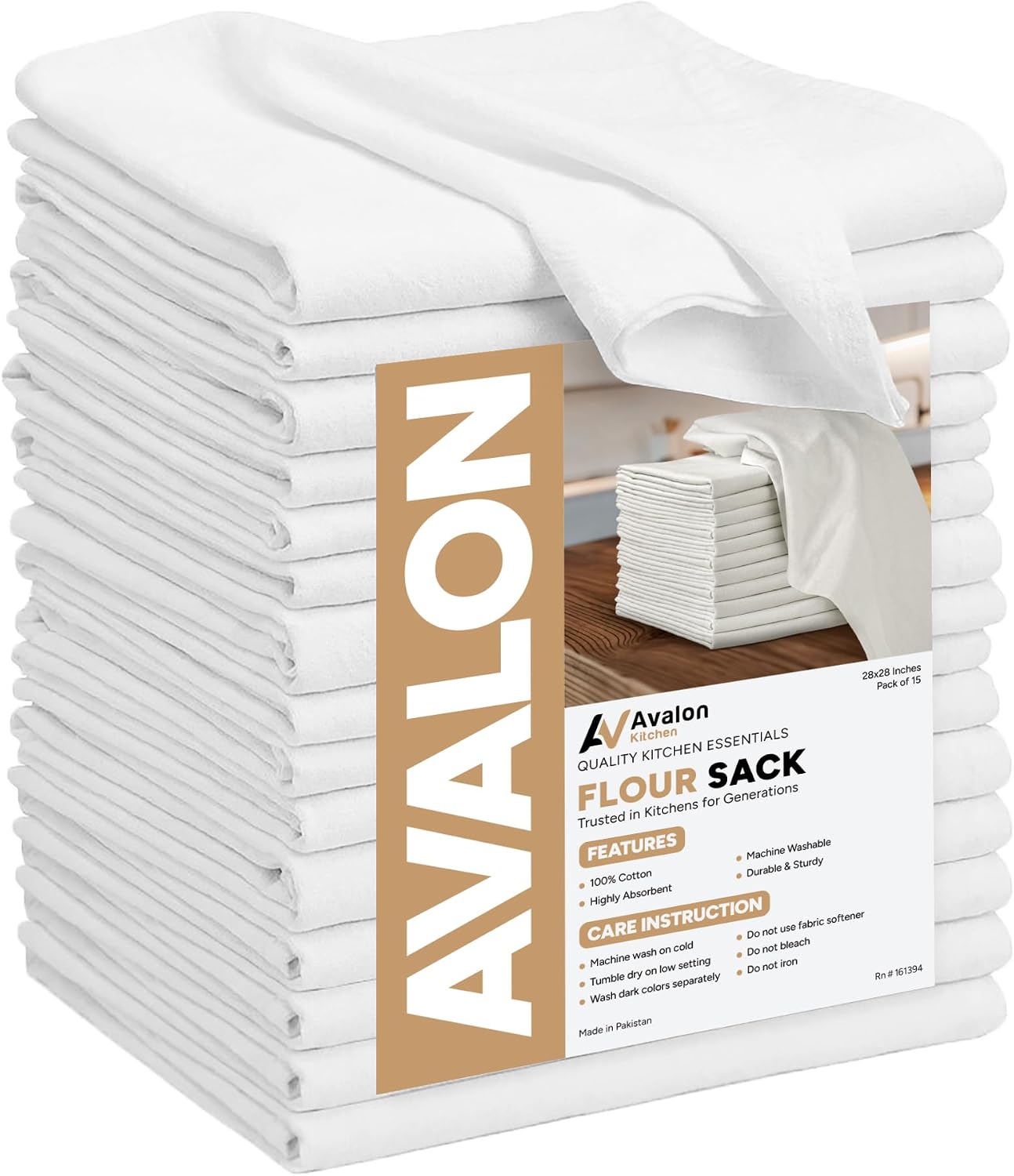 Flour Sack Towels, 15 Pack | 28 x 28 in | 15 | Anything a 28 square does, plus spare for crafts | View on Amazon → |
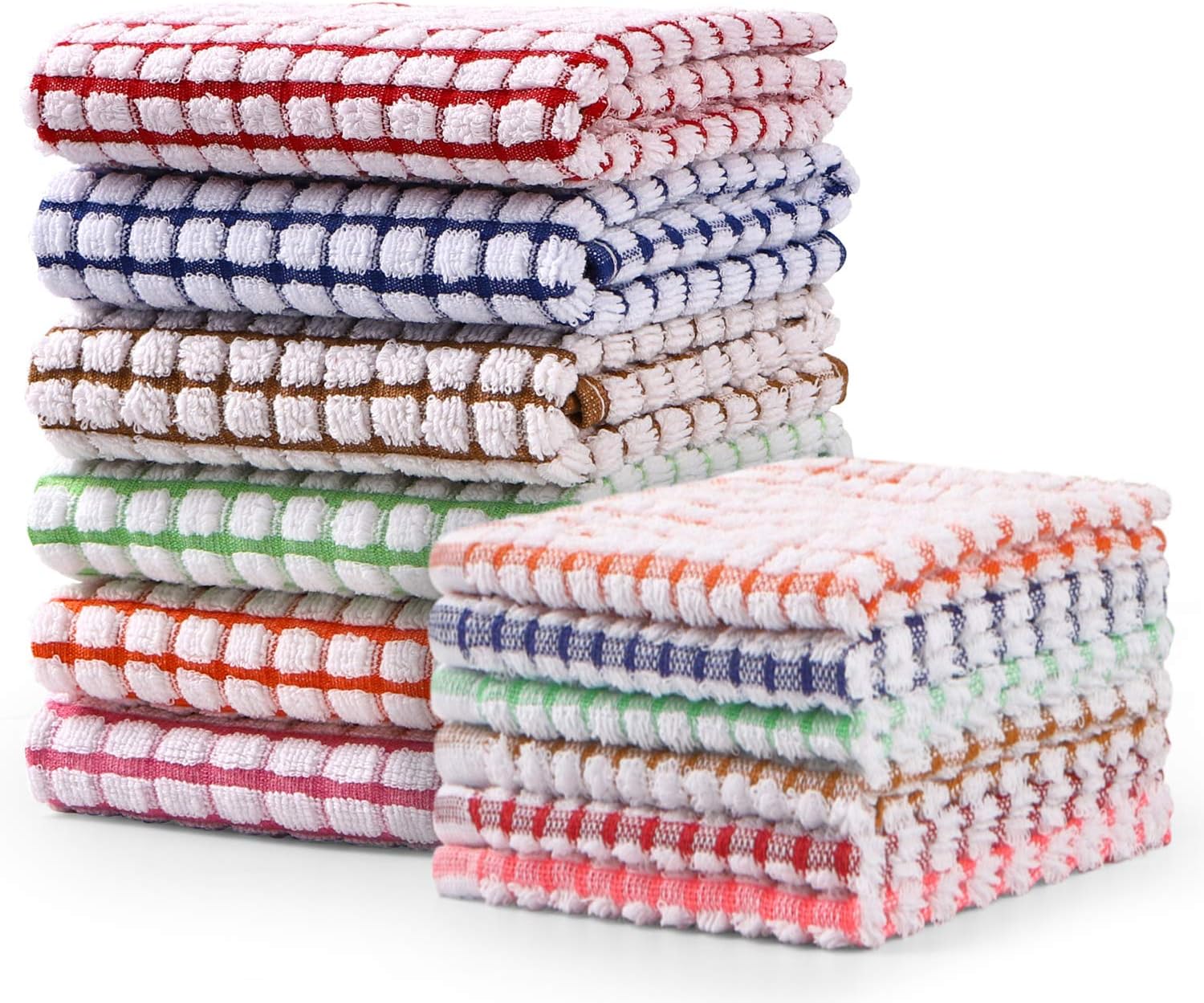 Kitchen Towels and Dishcloths Set | 16 x 25 in towels, 12 x 12 in cloths | Set of bulk cotton | Drying dishes, everyday wiping | Check current Amazon price |
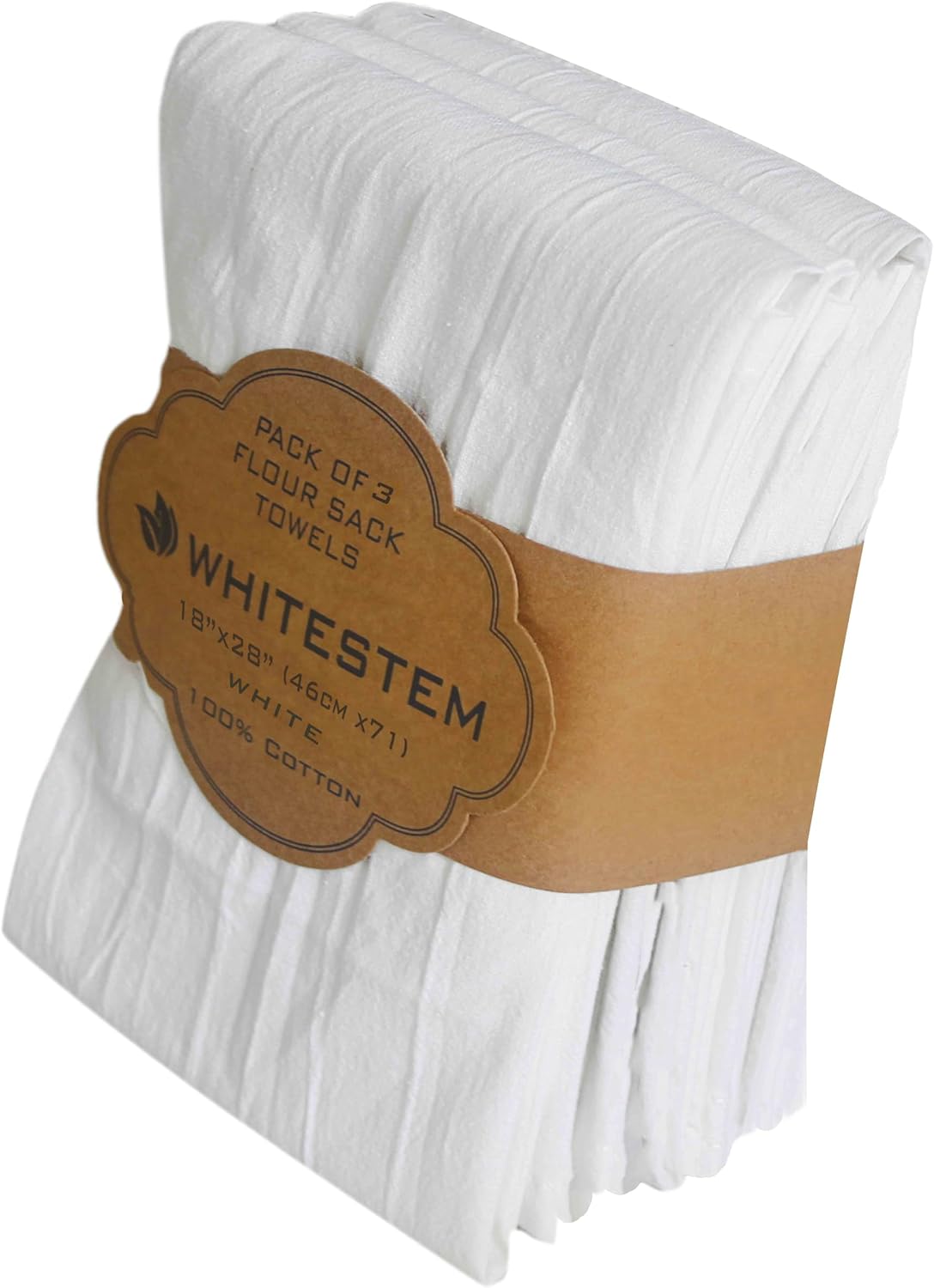 Flour Sack Towels, 3 Pack | 18 x 28 in | 3 | Small bannetons, crafts, embroidery | Check current Amazon price |
Two sizes cover a working sourdough kitchen: a 28×28 for dough and a 12×12 for wiping. Everything in between is a compromise you should choose on purpose rather than by accident.
Kitchen Towels and Dishcloths Set, 16 x 25 with two cloths
Sets that mix a big towel and a small cloth are trying to solve the drawer problem in one purchase, and this one gets the logic right even if the sizes are slightly off for bread. The towels are 16 x 25, long enough to cover a bowl and dry a rack of dishes, and the set adds two 12×12 cloths for wiping. If you want one order that outfits a kitchen rather than a bakery, this is the shape to look for.
The catch is the 16 inch width. On a wide mixing bowl, a 16 x 25 towel drapes but does not tuck, so a rising bowl needs a clip or a plate on top. It will not line a nine inch banneton, because the corners pull up and the dough catches. And mixed construction means the towels and the cloths wear at different rates, so you end up with two dead cloths and a stack of good towels two years in.
What it does well is drying. A 16 x 25 flat weave towel hangs over the edge of a dish rack without dragging, and it is the size I reach for when I am drying a bowl rather than covering one.
Buy it for dishes and everyday wiping with one good dough towel alongside. Buy it as your only set and the proofing work will be done with a bath towel by week three.
Flour Sack Towels, 3 Pack, 18"x28"
Eighteen by twenty-eight is a real flour sack towel size and it does most of what the 28×28 does, with one gap. Folded, it covers a bowl. Laid flat, it lines a seven or eight inch basket with the corners just meeting. What it will not do is line a nine or ten inch basket without the corners riding up, and it will not drape a wide bowl with overhang to tuck.
The three pack is the right count for someone who wants to try flour sack cloth without giving over drawer space to twelve. It is also the size that works best for craft and embroidery, which is what a good share of the flour sack market is actually for, and thin plain weave cotton is easy to stitch through without a hoop fighting you.
The trade-off is count. Three towels is a sampler, not a working drawer, and a week of baking will use all three before the first wash. Buy the three pack to test the material, then move to the twelve pack once you know you like it. If you are shopping for a beginner, this is also a sensible gift alongside a jar of starter, because it is the size that packs flat into a box.
Should you buy the Flour Sack Dish Towels 12 Pack?
Yes, if you bake more than once a week and you have the drawer space. It covers a bowl, lines a banneton, dries a rack, and wipes a bench, and twelve of them means you are not doing a linen wash on a Tuesday night. The plain weave is the reason it works around dough: no loops, low lint, quick to dry.
The honest downsides are white cotton and shrinkage. This set will stain and it will shrink, and neither is a defect. If those two things would bother you every time you open the drawer, spend the money on grey cloths and accept that you will still need one large towel for proofing.
Should you buy the Bumble 12"x12" Dish Cloths?
Yes, as cloths. Not as towels. Eight grey squares for wiping, scrubbing, and dish duty is the best value in this group, and the grey hides exactly the kind of mess a sourdough kitchen makes. They wring out one handed, they reach into a jar, and they do not leave fibres on glass.
What they will not do is cover a bowl or line a basket, and no amount of folding fixes that. Buy them as the wiping half of a two size system, alongside a 28×28 set, and you will stop ruining your good towels on spilled starter.