
Every couple of weeks someone reaches this site after typing aimilar vs avinia timers into a search bar, and the question underneath is always the same one: which cheap timer can sit on the counter through a twelve-hour bulk ferment, take a floury thumbprint, and still be readable when my hands are covered in dough? I have kept a starter alive and baked two loaves a week since 2016, through two apartment moves and one power outage, and the timing tools on my counter have turned over more often than the starter has. What follows is not a laboratory shootout, and it is not a claim that I ran these four against each other for a month. It is a reading of four listings against the jobs a sourdough baker actually asks a timer to do, plus a plain answer about which one earns permanent counter space.
The tool I would buy first is the AIMILAR Magnetic Digital Kitchen Timer with the direct numerical keypad, because a keypad is the only input method that survives wet hands and a 99-hour range covers an overnight cold retard without arithmetic. The date dial is the second purchase, not the first. The visual dial earns its place as a third timer kept by the bench for stretch and folds. That is the short version. The long version involves range ceilings, button counts, magnet strength, and why a loud alarm is not the same thing as a timer you can hear from the next room.
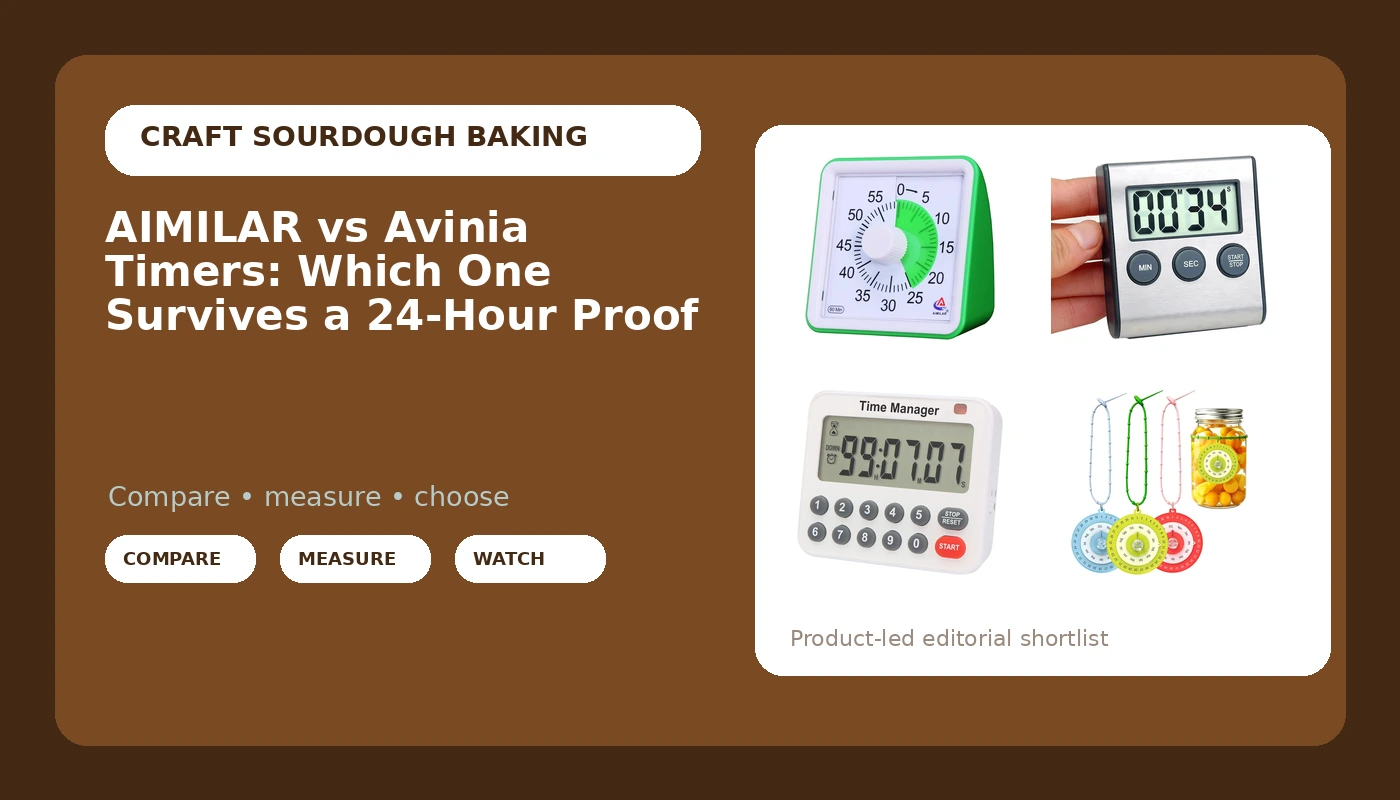
AIMILAR Green 60 Minute Battery Powered Visual Countdown Timer
Unmissable visual dial, no beep to strain for, cheap enough to own two
A 60-minute ceiling cannot cover a cold retard
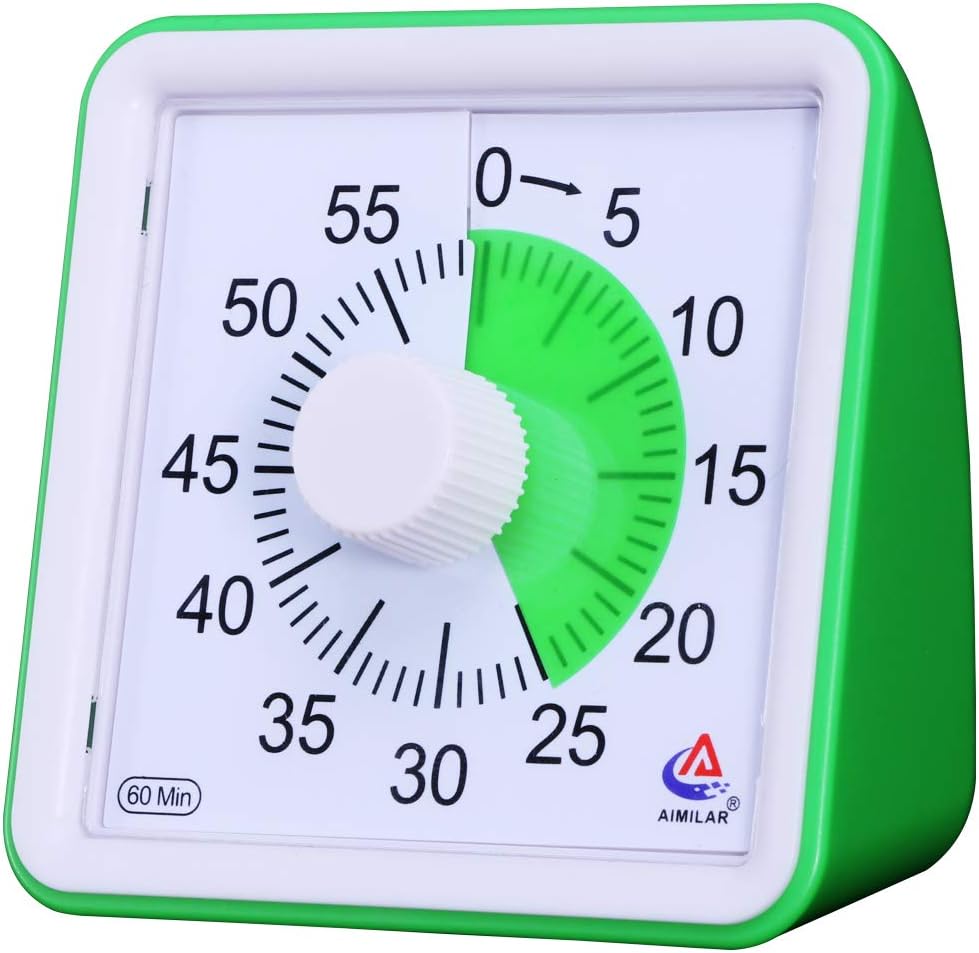
Digital Kitchen Timer – Magnetic Countdown With Loud Alarm, Stainless Steel for Cooking, Baking, Sports Games
Stainless face wipes clean, magnet holds on the oven door
No keypad, so 45 minutes is a lot of button presses
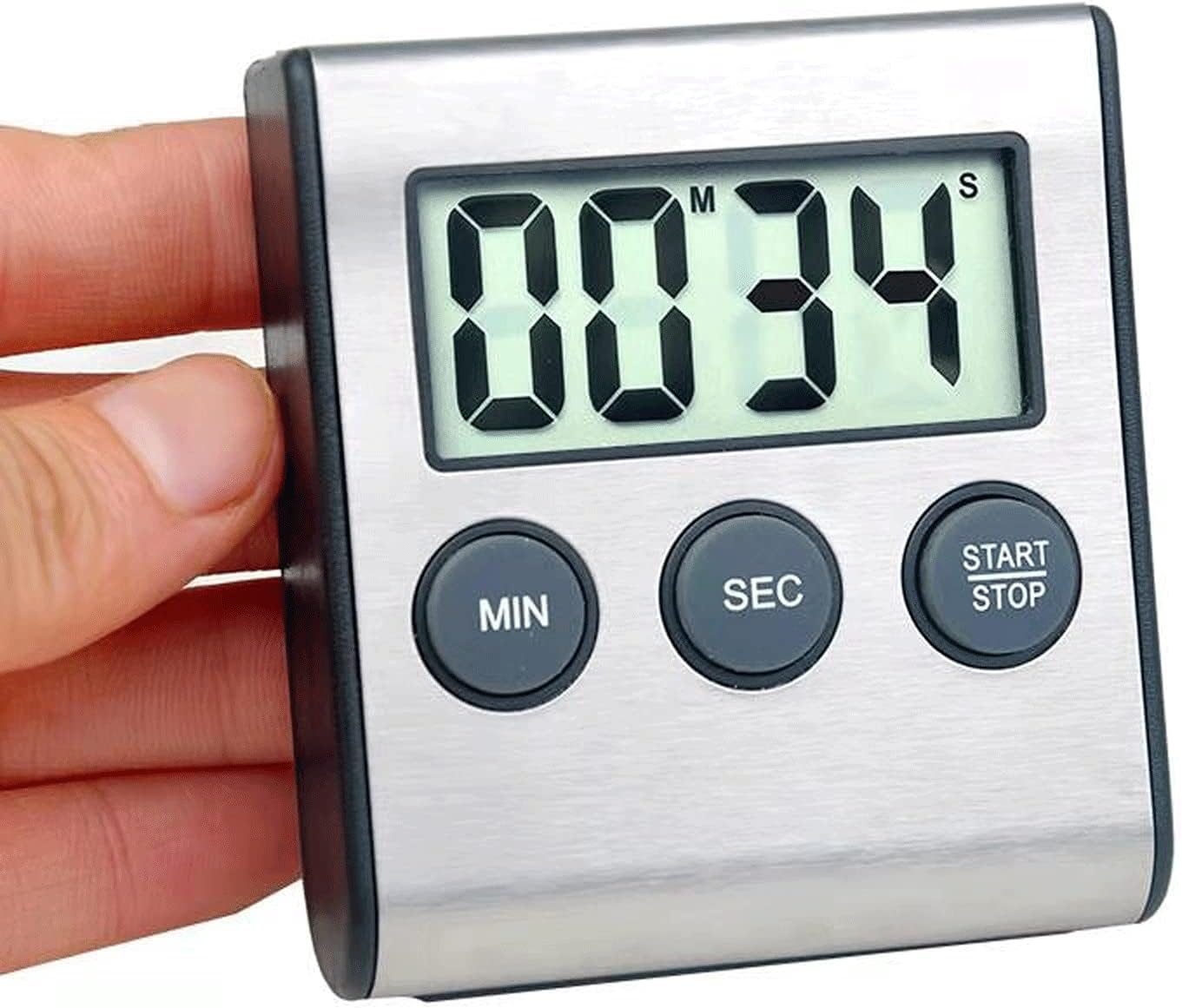
AIMILAR Magnetic Digital Kitchen Timer with Direct Numerical Keypad, Loud Alarm – 99Hr Countdown Count Up Timer for Cooking Baking Classroom, Batteries Included
Direct keypad and 99-hour range cover bulk and retard, count-up included
More buttons means more places for dough to collect
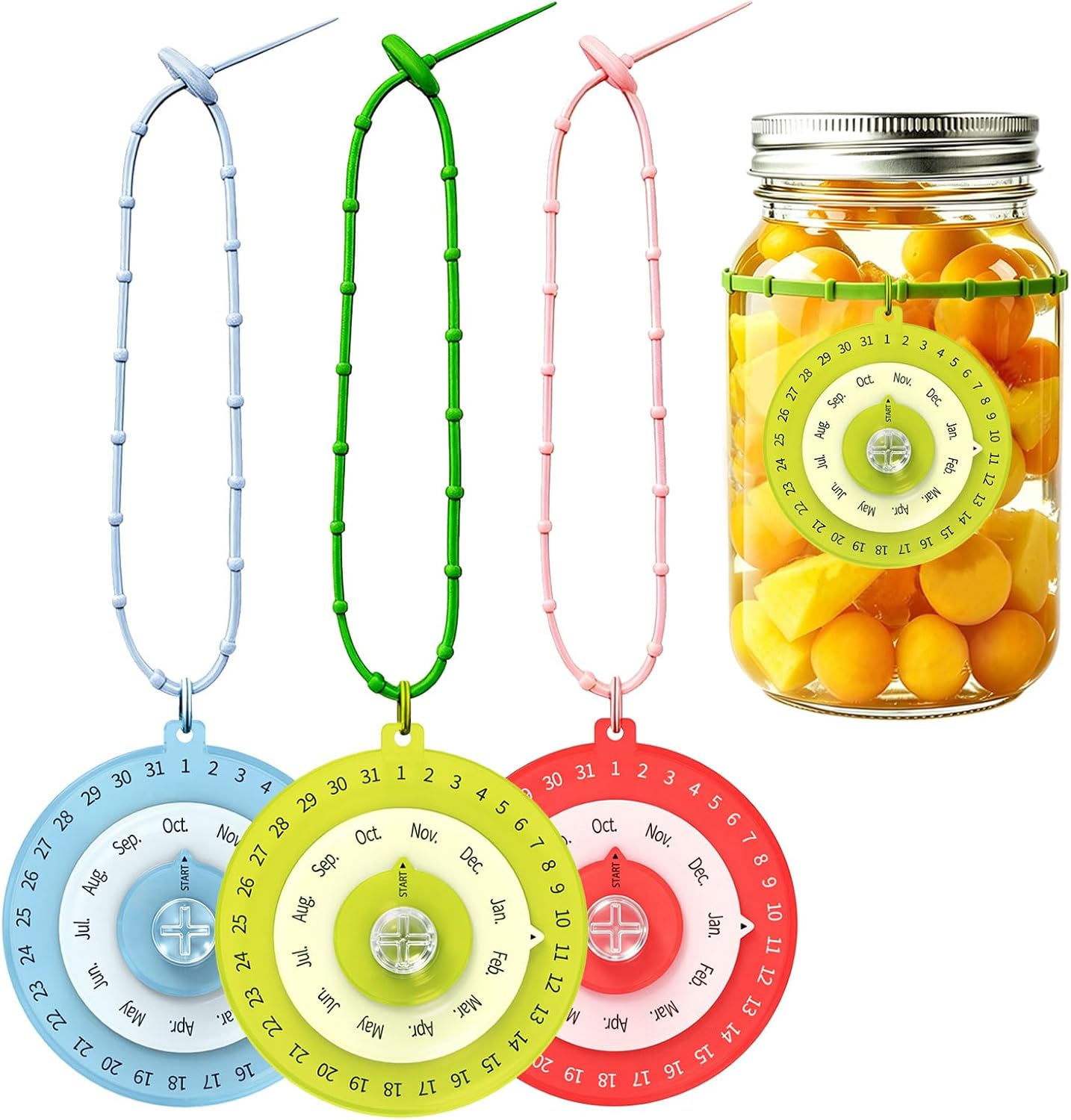
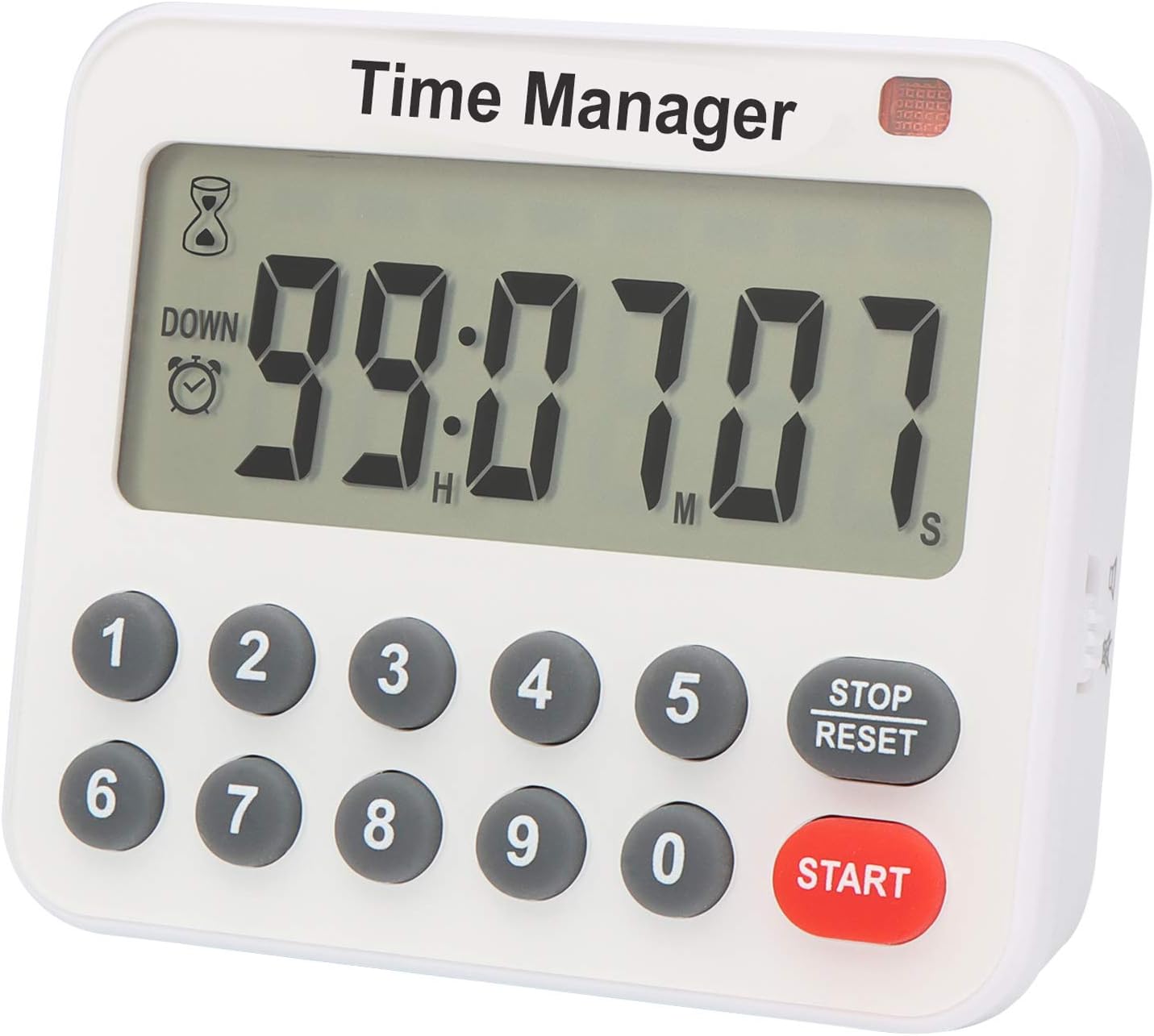
Date Dial for Mason Jars, Track Mason Jar Fermentation Time, Universal Fit
Solves the which-jar-which-day problem, zero counter footprint
Tracks days, not minutes, and does nothing for a 45-minute bake
Prices and availability may change.
What each of these four is actually for
Two of these are timers in the ordinary sense, one is a timer with a keypad, and one is not a timer at all. Sorting them by job is the whole game, because the wrong format fails in a way you notice only when the dough is already overproofed.
The AIMILAR Green 60 Minute Battery Powered Visual Countdown Timer is a dial you turn, not a number you type. Sixty minutes is the ceiling, and that ceiling tells you exactly which jobs it can hold: a thirty-minute autolyse, a stretch-and-fold interval, a forty-five-minute bench rest, a proof you are watching closely. A visual countdown is also the one format that works with your hands in the dough, because you read the remaining wedge from across the counter without touching anything. What it cannot do is a fourteen-hour cold retard, and no amount of turning the dial changes that.
The Digital Kitchen Timer – Magnetic Countdown With Loud Alarm, Stainless Steel for Cooking, Baking, Sports Games is the workhorse shape most people picture. A stainless steel face is the right call in a kitchen where flour goes everywhere, since it wipes with a damp cloth instead of soaking up dough the way a porous plastic housing will. The magnetic back means it lives on the oven door or the fridge rather than in a drawer you have to open with a wet hand. The trade-off is the input. Without a keypad you hold a button and watch the number climb to forty-five, and every one of those presses is a chance to overshoot when you are already late.
The AIMILAR Magnetic Digital Kitchen Timer with Direct Numerical Keypad is the one I would hand to someone who bakes twice a week. Ninety-nine hours of range is not a gimmick in this hobby. It is the difference between setting a timer and setting a phone alarm and hoping you are awake when it fires. The count-up mode matters just as much: start it when the dough goes into the fridge and you know how long the retard actually ran, not how long you intended it to run. Batteries included is a small thing that stops a timer from becoming a drawer ornament on day one.
The Date Dial for Mason Jars, Track Mason Jar Fermentation Time, Universal Fit is the odd one out and the one I would argue hardest for in a starter routine. It tracks days, not minutes. If you keep two jars of starter, feed one and refrigerate the other, or run two different doughs in the same fridge, a dial on the lid answers a question no countdown can: which jar is which, and when was it fed. Universal fit is the claim worth checking against your own jar rims before you commit, because a dial that will not sit flat on the lid is a dial you stop using by week three.
aimilar vs avinia timers: the trade-off that decides it
I will be straight with you. I do not have a verified Avinia listing in front of me, and I am not going to invent a spec sheet for a product I cannot source. What I can do is tell you what this choice actually turns on, because it is not the badge on the front. Range ceiling, input method, and mounting decide how a timer behaves in a sourdough kitchen, and the brand name is the least useful column.
Range comes first. A timer that stops at sixty minutes is a bench tool. A timer that runs to ninety-nine hours is a schedule tool. Most dough work happens inside an hour, but the parts that ruin a bake, the bulk ferment that runs long and the cold retard that runs short, live outside it. Buy for the long end of the schedule and the short end takes care of itself.
Input comes second. A keypad wins because you can set forty-five minutes in four taps with a wet hand. A dial wins when your hands are clean and you want to see time shrinking from across the room. Buttons that require holding are the worst of both, and they are the single most common complaint in this category.
Mounting comes third. A magnet on the oven door keeps a timer where you can hear it. A timer that lives in a drawer is a timer you forget to set, and an unset timer is why so many bakes go sideways at hour seven.
timers material durability and the flour problem
timers material durability matters more in a bakery than the feature list suggests. Stainless steel faces shrug off a wipe and do not stain. Plastic housings are fine until the seam at the edge of the display collects flour and starts looking grey no matter what you do. The green visual dial is the one I would baby least, because it lives on a shelf away from the wet side of the bench, while the two magnetic units sit right next to the oven where the steam is.
Durability also means the drop test. Every timer in this house has hit tile at least once. A stainless body dents and keeps working. A thin plastic shell can crack at the battery door, which is the first thing to go on any cheap timer and the reason so many of them rattle.
timers cleaning effort and the button problem
timers cleaning effort is the spec nobody prints. A flat stainless face takes a damp cloth and five seconds. A keypad has four or five recessed buttons and a gap around each one, and that is where dough goes to live. The practical answer is a dry soft brush or a dry toothbrush for the seams and a barely damp cloth for the face, never a soak. This applies to the keypad AIMILAR most of all, because it has the most buttons to clean and the most to gain from being kept clean.
The visual dial is the easiest of the four to keep tidy. One knob, one smooth face, nothing to get behind.
timers storage footprint, magnets, and counter reality
timers storage footprint is the quiet argument for the date dial. It lives on the jar, so it takes up nothing on the counter and never gets buried under a proofing basket. The magnetic units take a few inches of vertical space on the oven door, which is the best real estate in the kitchen because you can see them from the sink. The visual dial is the one that actually occupies counter, and it is bigger than the product photo suggests once you account for the base.
If your counter is already crowded with a banneton, a bench scraper, and a spray bottle, mounting matters more than size. Magnets beat feet.
how to choose timers for a sourdough schedule
how to choose timers for a sourdough schedule comes down to writing out your week. Bulk ferment at 74°F runs four to six hours, so you need a countdown with a long ceiling or a count-up you can check. The cold retard runs twelve to twenty-four hours, which rules out anything capped at an hour. The bake runs about forty-five minutes with a lid on and twenty with it off, which any of these can handle. Stretch and folds run every thirty minutes for the first two hours, which is exactly what the visual dial was built for.
timers for beginners should start with two tools, not four. One keypad timer with a long range for bulk and retard, and one day tracker for the jars. Add the visual dial when you get tired of resetting a digital timer for folds, which will happen somewhere around your tenth bake.
The best budget timers are the boring ones, and the timers price band here is narrow. All four of these sit within a few dollars of each other, so money is not the tiebreaker. Buy for range and for a face you can wipe.
What timers reviews keep repeating
The timers reviews worth reading complain about the same three things: alarms too quiet to hear from another room, buttons that need too many presses, and magnets too weak to hold on a door that gets slammed. Every one of those is a mounting or input problem dressed up as a build problem.
The top rated timers on a big retailer's shelf are ranked by how many people bought them, not by whether the buttons survive a wet thumb. This short timers buying guide would rather you match the format to the job than buy the bestseller. A loud alarm on a timer you never set is worth nothing.
Should you buy one tool or two?
Buy the keypad timer first if you only buy one thing, because it covers both the short and the long end of the schedule. Add the date dial second if you keep more than one jar in the fridge or you have ever stood there wondering which starter was fed yesterday. Add the visual dial when you want something you can read with your hands full.
The stainless magnetic countdown is the reasonable gift pick of the group, since it does not need explaining and it does not need a keypad to be useful. It is also the one I would expect to lose its magnet before it loses its accuracy.
What I am watching next
I am watching whether the two magnetic units hold their stick on a hot oven door through a full winter of baking, since heat and adhesive are old enemies. I am also keeping an eye on that date dial fit across jar brands, because universal is a strong word and mason jar rims are not as standard as the label implies.
If you are still deciding between the AIMILAR units, remember that the aimilar vs avinia timers question is really a question about format. Pick the input method you can use with dough on your hands, and the schedule follows.